


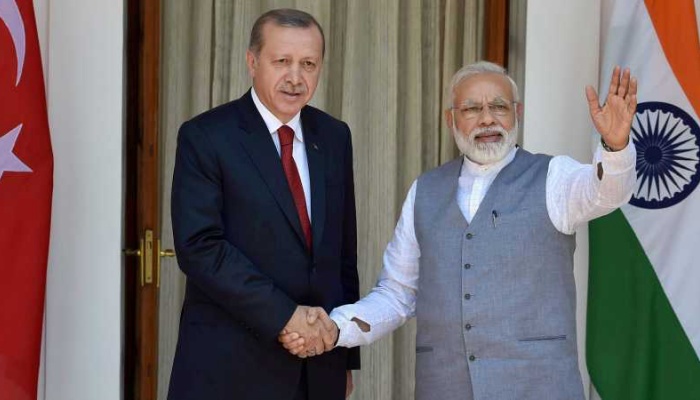
Nearly two decades after its exclusion from a multibillion-dollar Turkish airport tender, which later became part of a billion-dollar bribery allegation against then-prime minister and current president Recep Tayyip Erdoğan, Çelebi Holding lost its Indian business after Prime Minister Narendra Modi’s government revoked its security clearance, a move that came amid public anger in India over Ankara’s support for Pakistan.
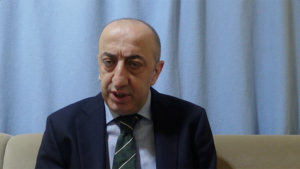
Canan Çelebioğlu, chair of Turkish aviation services group Çelebi, has spoken publicly for the first time about India’s May 2025 decision, saying nearly 20 years of work and as much as $500 million in business value disappeared in a single day.
Indian authorities revoked the security clearances of Çelebi’s subsidiaries on May 15, five days after India and Pakistan agreed to end four days of missile, drone and artillery exchanges.
The government cited national security, making it impossible for the group to continue ground handling and cargo operations at nine Indian airports.

“All our equipment, everything we had, was seized and they removed us from there,” Çelebioğlu said in an interview with Bloomberg HT’s Gözde Atasoy.
“They transferred our 10,000 employees to another company in a single day,” she said. “They brought the value we had created, perhaps $400 million or $500 million, down to zero in a single day.”
Çelebioğlu said the financial loss was only one part of the blow.
“Put the monetary value aside,” she said. “It was a place built stitch by stitch.”
She said the group had spent years developing the sector, working with Indian authorities and building its operation in a country she had regarded as a second home.


“This shocked us,” she said. “It truly saddened us.”
Ankara’s support for Pakistan triggers backlash
The decision followed a four-day military confrontation that began on May 7, 2025, when India launched strikes in Pakistan and Pakistan-administered Kashmir in response to an April attack that killed 26 people, most of them tourists, in Indian-administered Kashmir.
India blamed Pakistan-based militants for the attack, while Islamabad denied involvement.
Turkey condemned India’s strikes as provocative, and Erdoğan told Pakistani Prime Minister Shehbaz Sharif that Turkey stood in solidarity with Pakistan.
Pakistan also used Turkish-made drones during the confrontation, according to Indian authorities.

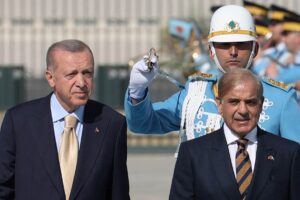
Turkey’s position prompted calls for a boycott of Turkish products, tourism and businesses in India.
Although Çelebi was neither owned nor controlled by the Turkish government, it became one of the largest corporate targets of the backlash.
The company said at the time that international investors held 65 percent of its parent company, while Can and Canan Çelebioğlu held the remaining 35 percent.
It also denied claims circulating in India that Erdoğan’s daughter Sümeyye Erdoğan had an ownership interest in the group.
India’s Bureau of Civil Aviation Security nevertheless withdrew the clearances of Çelebi and its associated companies with immediate effect.
Airport operators then terminated their contracts with the group and assigned its work to other ground handling companies.
At the Delhi airport, authorities allowed passes issued to Çelebi employees to be used temporarily as if the workers were employed by Air India SATS, Bird Worldwide Flight Services and GMR Airports.
Court documents show that Indian authorities ordered the airport operator to provide a list of Çelebi employees taken over by the replacement companies.
The exact number affected remains unclear.
Çelebioğlu put the total at 10,000, while court filings covering two of the company’s Indian entities referred to 3,791 jobs and individually vetted workers.
The larger figure may include employees across the group’s other Indian subsidiaries and workers employed through contractors.
Court backs India’s secret security case
Çelebi challenged the revocation, arguing that India had offered no warning, hearing or explanation beyond a reference to national security.
The company said its permits had been renewed for five years in November 2022 after security reviews and that it had operated for 17 years without a recorded security violation.
The Delhi High Court rejected the challenge in July 2025 after examining confidential material submitted by the Indian government.
The court said the material showed “compelling national security considerations,” including the possibility of espionage or the dual use of logistics capacity during an external conflict.
It also cited geopolitical considerations but did not disclose the underlying evidence.
The judgment said ground handling companies have access to aircraft, cargo, passenger information and restricted areas, giving the state grounds to take preventive action.
The decision means the public record does not establish that India acted solely as political retaliation for Erdoğan’s support for Pakistan.
It also leaves Çelebi unable to examine or answer the evidence used against it because the security material remains secret.
The Indian action was not a formal nationalization.
Çelebi retained legal ownership claims over at least some equipment and listed about 1.02 billion lira in property, machinery and equipment from India as assets held for sale at the end of 2025.
The company’s audited accounts show that its Indian subsidiaries generated 6.48 billion lira in revenue and 1.18 billion lira in operating profit in 2024.
Multi-billion tender lost amid alleged bribery of Erdoğan
The story carries an irony for a company driven out of India amid anger over Erdoğan’s policies.
Nearly 20 years earlier, Çelebi said it had been denied a fair chance in one of the largest airport tenders held under Erdoğan’s government.
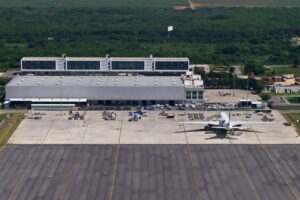
Çelebi and Vienna International Airport entered an April 2007 tender for the operating rights to Antalya Airport, a gateway to Turkey’s Mediterranean tourism region.
Bid officials excluded the consortium before opening its financial offer, citing problems with a €25 million letter of guarantee and other documents.
The Fraport and IC Holding consortium won the 17-year concession with a payment of €2.37 billion, then worth about $3.2 billion.
Çelebi protested the decision the following day, insisting that its documents met the auction rules and saying it would have pushed the price above $4 billion if allowed to continue.
The company later filed a lawsuit seeking the tender’s cancellation.
The dispute returned to public attention in 2023 when Ali Yeşildağ, a member of a family with ties to Erdoğan, released a video alleging that Çelebi had been removed through a scheme involving people close to the Turkish leader.

Yeşildağ claimed documents were taken from Çelebi’s file so auction officials could exclude the company for incomplete paperwork. He alleged that the move allowed the Fraport and IC Holding consortium to win for about $3 billion and that Erdoğan received a $1 billion bribe connected to the result.
Fraport denied the bribery allegation, saying its consortium received the concession because it submitted the highest financial offer.
That response did not address Yeşildağ’s central claim that Çelebi had been improperly eliminated before its financial offer was opened.
For a company once pushed aside in an Erdoğan-era airport tender at home, the irony was hard to miss. Nearly 20 years later, the Turkish president’s foreign policy had become part of the political backlash that cost Çelebi another airport business.