

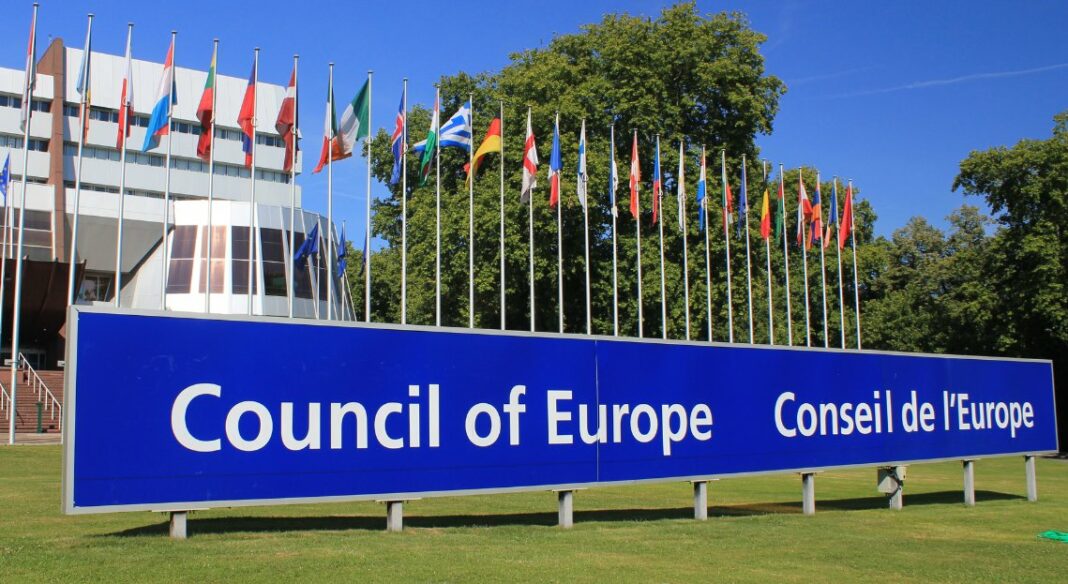

The Council of Europe’s Committee of Ministers has rejected Turkey’s attempt to close supervision of a European Court of Human Rights judgment on Greek Cypriot property rights, keeping the long-running Cyprus v. Turkey case under international monitoring.
Member states backed a Cypriot proposal to continue supervision of the case during a Committee of Ministers meeting this week, with 25 votes in favor, two against and 19 abstentions, according to the Cypriot Foreign Ministry.
The decision means the committee will continue overseeing Turkey’s implementation of the ECtHR judgment instead of closing the case as Ankara had requested and will move ahead with steps toward possible further legal clarification.
The Committee of Ministers is responsible for supervising the execution of ECtHR judgments and determining whether member states have complied with rulings under the European Convention on Human Rights.
The vote also supported preparing an interpretative question related to paragraph 63 of the ECtHR’s 2014 just satisfaction judgment in Cyprus v. Turkey. Cyprus argues that clarification is needed on the scope of Turkey’s obligations under the court’s 2001 Grand Chamber judgment, particularly regarding the homes and property of displaced Greek Cypriots.
The committee’s secretariat has been instructed to draft the question that could later be referred to the ECtHR under Article 46.3 of the convention, which allows the committee to seek clarification when disputes arise over the interpretation of judgments.
The dispute stems from property claims linked to Turkey’s 1974 military intervention in Cyprus, which led to the island’s division. The internationally recognized Republic of Cyprus controls the south, while Turkish Cypriot administration governs the north.
Cyprus argues that further clarification is needed to ensure proper implementation of the ruling, while Turkey opposed the move, saying the threshold for an interpretative referral had not been met and that the case should be closed.
Cypriot Foreign Minister Constantinos Kombos said Turkey had failed to achieve its objective. “This is not the end of the road. Several significant efforts are still required,” he said after the meeting.
Turkish Cypriot leader Tufan Erhürman said the decision was procedural and did not amount to a finding of non-compliance by Turkey, adding that it did not affect the status of the Immovable Property Commission in northern Cyprus.
The case is expected to return to the Committee of Ministers next June. Any decision to refer the interpretative question to the ECtHR would require a qualified majority of at least 31 member states.
Cyprus remains divided, with the north administered by Turkish Cypriots and the south controlled by Greek Cypriots. Thousands of Greek Cypriots were displaced from properties in the north, and the European Court of Human Rights has issued rulings finding violations of property rights and awarding compensation. The Immovable Property Commission in northern Cyprus processes property claims and has been recognized by the ECtHR in certain cases as a domestic remedy.