


Turkish stocks plunged, the lira came under pressure and JPMorgan forecast an imminent rate hike after a court stripped the main opposition Republican People’s Party (CHP) of its current leadership on Thursday.
The Ankara Regional Court of Justice’s 36th Civil Chamber annulled the CHP’s 38th ordinary congress, the vote that brought Özgür Özel to party leadership in November 2023, and reinstated former chairman Kemal Kılıçdaroğlu.
The ruling hit Turkish markets like a thunderclap, adding political shock to an economy reliant on foreign inflows, tight monetary policy and investor confidence in Treasury and Finance Minister Mehmet Şimşek’s economic program.
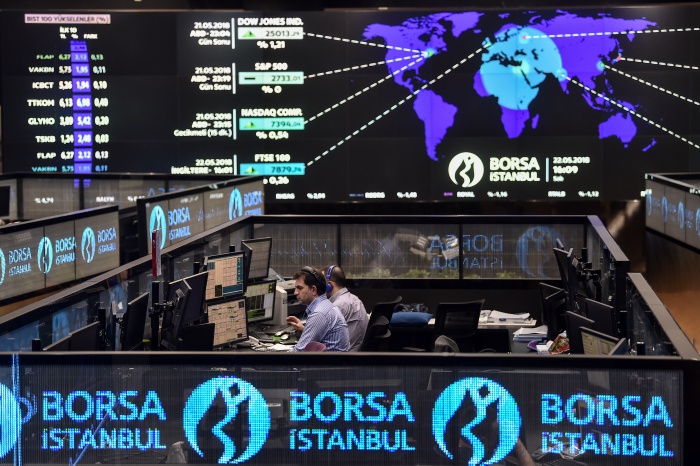
Borsa İstanbul’s benchmark BIST 100 index fell more than 6 percent after the decision, triggering a circuit breaker. Banking shares, which are more exposed to interest rate expectations and currency stress, dropped more than 8 percent.
The lira weakened sharply, prompting state banks to sell foreign currency to limit the decline. Reports citing Bloomberg put state bank intervention at around $6 billion after the ruling, with some economists estimating the total to be higher. Official reserve data had not yet confirmed the scale of the sales.
Turkish sovereign debt and risk pricing also suffered. Five-year credit default swaps climbed above 250 basis points, while dollar-denominated bonds fell as investors demanded a higher premium to hold Turkish risk.
JPMorgan stated in a client note cited by Reuters on Friday that it now expects Turkey’s central bank to raise its one-week repo rate to 40 percent from 37 percent at its June 11 meeting, or possibly earlier, warning that rising political risks have come at “an unhelpful time” for the lira. Swap markets reflected this view, with Turkish lira swap rates rising after the ruling as investors began pricing in additional tightening.
Şimşek and Central Bank Governor Fatih Karahan were in London for a BBVA Türkiye Conference, where they had been trying to reassure foreign investors about Turkey’s economic outlook. Turkish media, citing emerging markets economist Timothy Ash, reported that investors at the London meeting began returning to their offices as news of the CHP ruling broke.
Şimşek convened the Financial Stability Committee on Friday morning. The ministry stated that the committee reviewed the impact of domestic and external developments on financial markets and discussed possible measures to preserve stability, pledging that all necessary steps would be taken in coordination to support macrofinancial stability, continue disinflation and maintain the functioning of the financial system.
The selloff demonstrated how closely Turkey’s economic program is tied to political stability. Şimşek’s orthodox agenda relies on tight monetary policy, foreign portfolio inflows and a gradual rebuilding of central bank reserves depleted during years of unorthodox policy under President Recep Tayyip Erdoğan. Foreign investors returned to Turkish assets after Erdoğan appointed Şimşek in 2023 and allowed the central bank to raise rates, but that confidence has always been fragile, sensitive to political shocks, court rulings and any sign of state pressure on the opposition.
The latest ruling drew immediate comparisons to the market turmoil that followed the March 2025 arrest of İstanbul Mayor Ekrem İmamoğlu, Erdoğan’s main political rival and the CHP’s presidential candidate, a crisis that also rattled Turkish assets and forced the economic team into damage-control mode.