


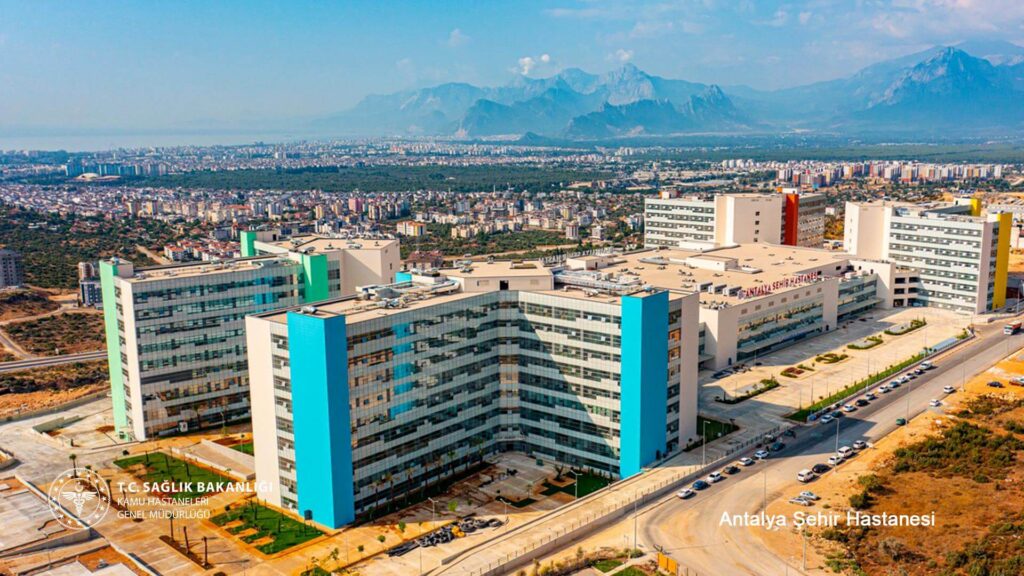
Turkey’s Health Ministry paid 57.56 billion lira ($1.27 billion) to companies operating city hospitals built under the public-private partnership (PPP) model in the first four months of 2026, nearly five times the amount allocated to cancer-control programs in the same period, the BirGün daily reported, citing ministry budget figures.
Cancer-control spending stood at 12.17 billion lira ($269 million) between January and April, meaning PPP city hospital payments were about 4.7 times higher.
The payments to city hospital operators were uneven across the four-month period, totaling 22.22 billion lira ($491 million) in January, 6.33 billion lira ($140 million) in February, 6.74 billion lira ($149 million) in March and 22.27 billion lira ($492 million) in April. The report did not explain the monthly fluctuations.
In all of 2025 the ministry paid 111.1 billion lira ($2.45 billion) to companies operating Turkey’s 18 city hospitals.
The amount paid in the first four months of 2026 was already more than half of the full-year 2025 total, suggesting that PPP hospital payments will remain one of the most closely watched items in the Health Ministry budget this year.
Turkey opened its first PPP city hospital in the central province of Yozgat in 2016. Under the model, private companies build and operate the facilities, while the state makes long-term payments for rent and services.
President Recep Tayyip Erdoğan has defended PPP projects as a way to build large facilities without heavy upfront public spending.
Erdoğan had previously said “not a penny” would come out of the state’s coffers for such projects.
Opposition politicians and medical organizations, however, say the model pushes costs into future budgets and makes the state’s long-term obligations less transparent.
A 2024 audit by Turkey’s Court of Accounts, the country’s top public auditing body, found problems beyond the spending totals. According to Turkish media reports citing the audit, auditors identified deficiencies in medical equipment at city hospitals, said faulty equipment had not been repaired by contracted companies and found that penalties for appointment-system failures had not been applied.
Auditors also said the ministry had not completed final acceptance procedures and had failed to conduct market tests, a mechanism used to determine whether contracted service prices remain reasonable as agreements age.
The Turkish Medical Association has also criticized the city hospital model, saying many of the hospitals were built on the outskirts of cities or away from central areas, making them harder to reach for patients without cars and increasing travel times for people who rely on public transport.
The association says the location and scale of the hospitals have created access problems, especially for low-income patients, older people and those requiring frequent care.
Cancer screening, early diagnosis and follow-up programs depend on sustained public funding. Medical groups and opposition lawmakers have argued that city hospital lease and service payments are crowding out preventive care and other public health priorities.