


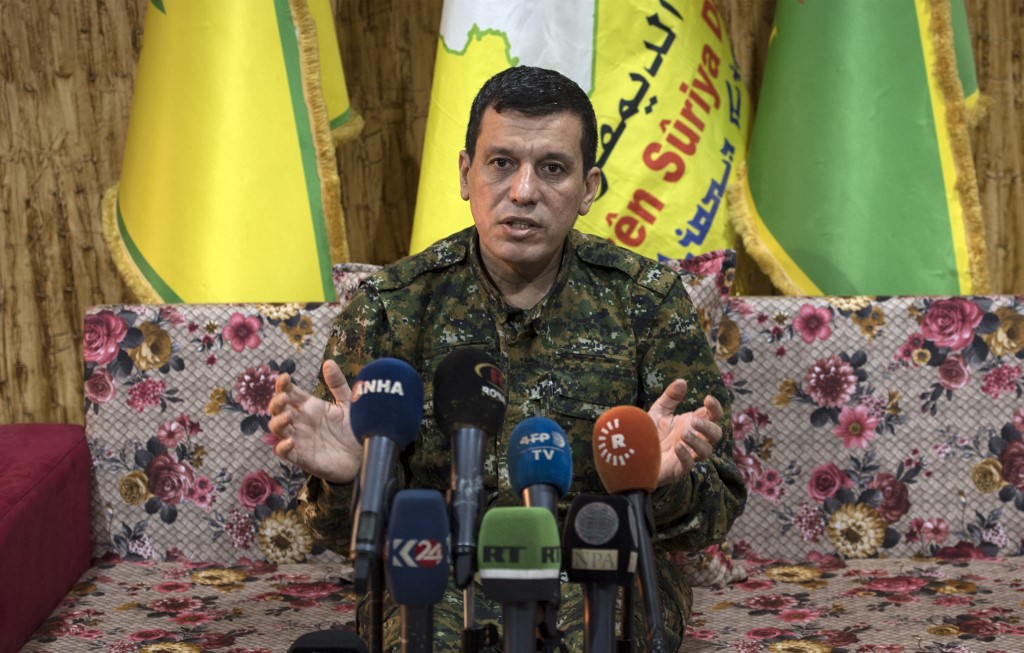
The commander of the Kurdish-led Syrian Democratic Forces (SDF) has said plans for a visit to Turkey are being discussed and that a trip could include a meeting with Abdullah Öcalan, the jailed founder of the outlawed Kurdistan Workers’ Party (PKK), as talks continue over the future of Kurdish-controlled areas in Syria.
Mazloum Abdi made the remarks in an interview with Amberin Zaman published by Al-Monitor on Thursday, amid negotiations with Damascus over the SDF’s integration into the Syrian army and contacts with Turkish officials.
Asked whether he had received an invitation from Turkey after previously saying he would consider traveling to Ankara, Abdi said such plans were “currently in the making.”
When asked if a confirmed trip could include a meeting with Öcalan, Abdi replied that “it might.”
Öcalan, who has been imprisoned on İmralı Island in Turkey since 1999, founded the PKK, an armed group designated as a terrorist organization by Turkey and its Western allies. Turkey views the SDF’s main component, the People’s Protection Units (YPG), as the PKK’s Syrian branch, while the SDF served as the main US partner in the fight against the Islamic State group in Syria.
Abdi said contacts with Turkish officials were continuing but declined to give details. He also said the SDF believes the Syrian government should be part of any talks with Turkey.
“We believe that it would be more fruitful for the Syrian government to be part of any discussion we have with Turkey,” he said.
Abdi denied recent reports that he had met with Nuh Yılmaz, Turkey’s ambassador in Damascus, calling them inaccurate.
He also said the reopening of the Nusaybin-Qamishli border crossing between Turkey and Syria had been agreed with Damascus and that a date had been set, but that the move was postponed due to tensions in the northwestern Syrian town of al-Hasakeh over the removal of a Kurdish-language sign from a court building.
Abdi said the crisis had been defused and that the crossing should reopen soon.
The remarks come four months after the SDF signed a revised integration and ceasefire agreement with the Syrian government on January 29. The deal followed clashes and has prompted criticism from many Kurds, who say the SDF failed to secure sufficient guarantees for Kurdish political, cultural and administrative rights.
Abdi defended the agreement, saying the SDF’s main goal is to make sure the integration process is carried out “justly and fairly” and that the rights of Kurdish-majority areas are preserved.
He said four brigades made up of SDF fighters and commanded by SDF officers have been formed as part of the Syrian army. Each brigade has about 3,000 fighters, he said.
The brigades are based in the towns of Kobani, Derik, al-Hasakeh and Qamishli, according to Abdi.
He said the SDF has not yet been dissolved and will continue to exist until the integration is complete.
Abdi also said the local internal security force known as Asayish would remain intact in Kurdish-majority areas and would be integrated into the Syrian state. He put the number of Asayish personnel at about 15,000.
He said the SDF had agreed with Damascus that roughly 50,000 employees of the autonomous administration would keep their jobs and receive salaries from the relevant Syrian ministries.
On education, Abdi said Damascus had agreed to recognize middle and high school diplomas issued by the autonomous administration since its creation. He said students graduating this academic year and the next from schools using the autonomous administration’s curriculum would receive diplomas from the Syrian state.
He said a joint committee would discuss the future of the curriculum, adding that the SDF’s main demand is education in Kurdish in Kurdish-majority areas.
Abdi acknowledged that mistakes were made in earlier talks with Damascus, particularly over the timing and terms of integration in Arab-majority areas such as Raqqa and Deir Ezzor.
He said the SDF sought to negotiate for the whole north and northeast of Syria as one region rather than hand over areas step by step but added that the group “did not show enough flexibility.”
Abdi also criticized US policy, saying Washington moved too late to stop the latest fighting and favored the central government in Damascus. He said US envoy Tom Barrack and his team remain involved in following up on the integration agreement.