


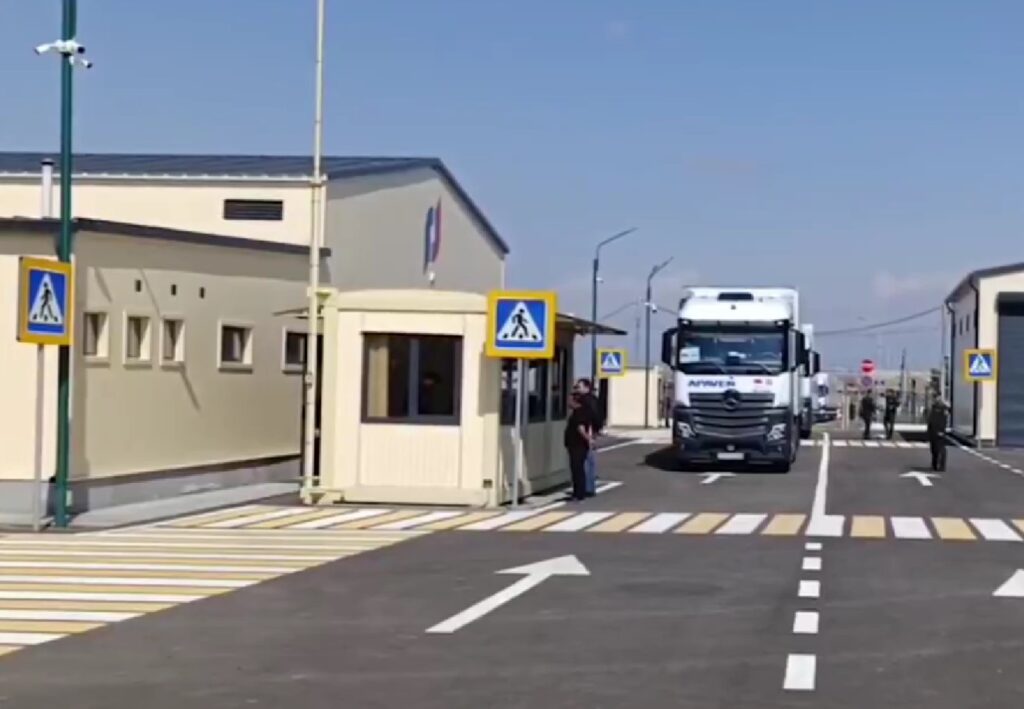
Turkey and Armenia have completed bureaucratic preparations to launch direct trade, marking another step in a process of normalization aimed at restoring ties between the two neighbors after decades of estrangement.
Turkish Foreign Ministry spokesperson Öncü Keçeli said in a statement on X on Wednesday that the preparations were complete as of May 11 as part of “confidence-building steps” taken under the normalization process that began in 2022.
Turkey and Armenia have no formal diplomatic relations, and their land border has been closed since 1993, when Ankara shut it in support of Azerbaijan during the first Nagorno-Karabakh war.
He said technical and bureaucratic work to open the common border between the two countries is still underway.
Ülkemiz ile Ermenistan Arasında Doğrudan Ticaretin Başlatılması Hakkında:
Ermenistan ile 2022 yılından bu yana devam eden normalleşme sürecimiz çerçevesinde atılan güven artırıcı adımlar kapsamında, ülkemiz ile Ermenistan arasında doğrudan ticaretin başlatılmasına ilişkin…
— Öncü Keçeli | Dışişleri Bakanlığı Sözcüsü (@oncukeceli) May 13, 2026
Under the new arrangement, goods traveling from Turkey to Armenia through a third country, or in the opposite direction along the same route, can now list their final destination or point of departure as “Armenia/Turkey,” Keçeli said.
In practice, trade between the two countries is already taking place on both sides, mainly via Georgia.
“Turkey will continue to contribute to the development of economic relations in the region and the further advancement of cooperation for the benefit of all regional countries and peoples,” he said, citing what he called a historic opportunity to strengthen lasting peace and prosperity in the South Caucasus.
Armenia welcomed the move, with foreign ministry spokesperson Ani Badalyan describing it as a decision to lift bans on bilateral trade and “another outcome” of the normalization process.
Badalyan said the decision was important for expanding trade and ties between business communities, improving economic connectivity and promoting peace and prosperity in the region.
We welcome Türkiye's decision to lift the bans on bilateral trade with Armenia, which is another outcome of the normalization process of relations between #Armenia & #Türkiye.
This decision is significant from the perspective of expanding trade & ties between the business…
— Ani Badalyan, 🇦🇲 MFA Spokesperson (@ArmSpoxMFA) May 13, 2026
She said the step could be followed by the opening of the Armenia-Turkey border and the establishment of diplomatic relations.
The two countries launched a renewed process of normalization in late 2021 by appointing special envoys. Direct flights resumed in February 2022, and the two sides later agreed to begin direct air cargo trade and open the land border to third-country nationals and diplomatic passport holders.
Turkey’s national carrier, Turkish Airlines, operated its first direct flight between İstanbul and Yerevan in March.
Despite those steps, the border has yet to reopen, with progress in Turkey-Armenia ties still closely linked to developments in Armenia’s talks with Azerbaijan.
Recent moves, including plans to restore the historic Ani Bridge on the border, are seen as part of a broader effort to advance regional normalization.
The process is also unfolding against the backdrop of a century-old dispute over the mass killings of Armenians under the Ottoman Empire, which remains one of the most sensitive issues between the two countries.
The Armenians say 1.5 million of their people were killed under the Ottoman Empire from 1915 to 1917 and seek international recognition that it was genocide.
Turkey strongly denies the accusation of genocide and disputes the numbers, saying that the Armenians were among hundreds of thousands of people who died in the turmoil of World War I as the Ottoman Empire disintegrated.