


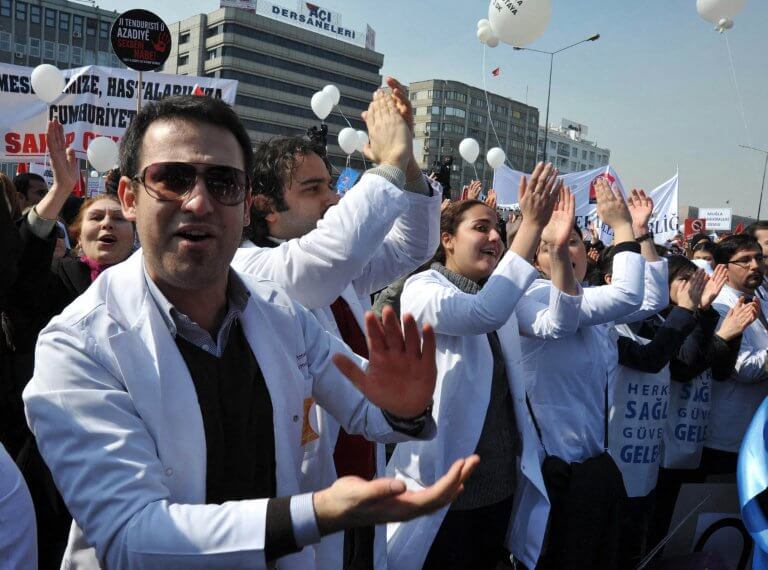
The newly elected head of the İstanbul Medical Chamber has warned that Turkey may struggle to find doctors willing to perform high-risk surgeries, citing worsening working conditions, violence against healthcare workers and a growing number of young doctors seeking careers abroad.
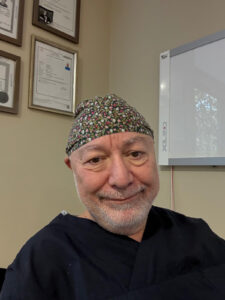
Prof. Dr. Talat Kırış, a prominent neurosurgeon who was elected chair of the İstanbul Medical Chamber in April, told the T24 news website in an interview published on Tuesday that risky specialties such as neurosurgery, cardiovascular surgery and pediatric surgery are becoming less attractive to young physicians.
“No one wants risky fields such as brain, heart and pediatric surgery,” Kırış said. “If you try to put all responsibility for the risks on the physician, we may not be able to find anyone to perform these surgeries in the future.”
Kırış said Turkey’s healthcare system has reached a point where neither doctors nor patients are satisfied.

He linked the problem to what he described as the commercialization of healthcare under Turkey’s Health Transformation Program, saying public resources have increasingly been channeled to private hospitals while secure working conditions for doctors have eroded.
Doctors in public hospitals are under pressure from a performance-based system, while those in private hospitals face pressure to generate revenue, he said.
The program, introduced in the early 2000s, expanded access to healthcare but also accelerated the growth of private hospitals through contracts with the Social Security Institution (SGK), allowing patients to receive treatment at private facilities with public reimbursement. Critics say the model has diverted public funds to private healthcare providers and encouraged a system driven by patient volume and revenue targets.
Kırış said the recent “newborn gang” scandal had exposed deeper problems in the system, calling it likely “only the visible part of the iceberg.”
The scandal erupted in October 2024, when prosecutors accused dozens of doctors, nurses, ambulance drivers and other medical workers of involvement in the death of at least 10 newborns. The indictment alleged that some suspects withheld treatment and falsified records to keep babies hospitalized longer and obtain more payments from the social security system.
Kırış said another consequence of the system was an increase in violence against healthcare workers, adding that punitive measures alone would not solve the problem.
“The environment that gives rise to violence must be analyzed well: Violence will not end through punishment alone,” he said.
He said patients who are unable to access proper care often blame doctors and other healthcare workers for the problems they face, while physicians are forced to examine patients in extremely short appointment slots and under constant pressure.
Kırış said the solution requires a better healthcare system, with a larger share of national income allocated to health and resources distributed with a more public-oriented and people-centered approach.
He also criticized Turkey’s city hospital model, saying it had diverted resources away from more accessible public hospitals in city centers.
Built under public-private partnership agreements, city hospitals were promoted as a solution to overcrowding and inefficiency but have attracted criticism over their cost, occupancy guarantees and reliance on public payments to private operators.
Kırış said many central public hospitals had been closed or left idle to direct patients to large city hospitals, often located outside city centers, while a significant share of the healthcare budget is now allocated to the model.
“Unless this allocation of resources changes, the share set aside for physicians, healthcare personnel and hospital investments will not be sufficient,” he said.
Turkey’s public healthcare system has been facing a growing shortage of doctors, particularly specialists, amid heavy workloads, low wages, violence in healthcare facilities and deteriorating working conditions.
Figures compiled by the Turkish Medical Association (TTB) show that more than 21,000 specialists have resigned from public hospitals over the past 13 years, including 1,759 in the first 10 months of 2025.
Medical organizations have warned that some provinces have been left with only one specialist, or none, in key fields such as oncology and pediatrics, forcing patients to travel long distances for care.
Kırış said the same concerns explain why many medical students and young doctors are focusing on learning German instead of preparing for Turkey’s Medical Specialty Exam.
A growing number of doctors have also sought to work abroad. According to TTB figures, 3,050 doctors applied for documents required to work overseas in 2023, followed by 2,669 in 2024 and 2,400 in the first 11 months of 2025.
He said young physicians are leaving not necessarily because they are happier abroad but because they believe they can build a safer future there, with secure working conditions and guaranteed access to education and healthcare for their families.