


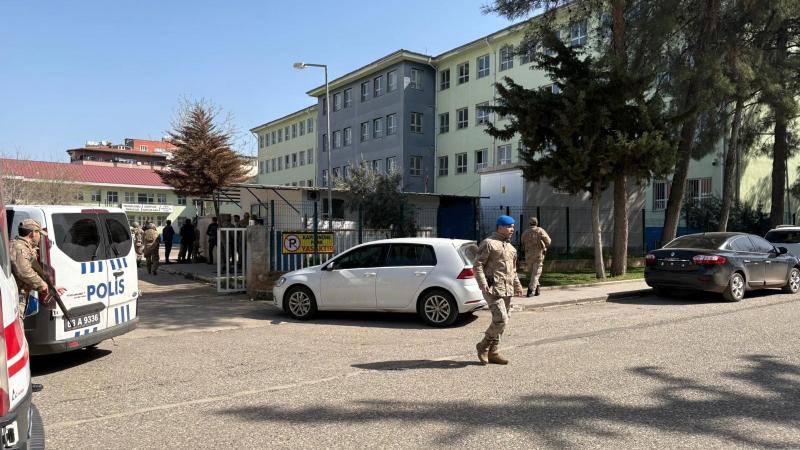
Turkey’s education minister said Thursday that the government will use artificial intelligence to screen school absenteeism, disciplinary records and signs of possible criminal risk as part of a new safety push after two school shootings this month shook a country in which such attacks are rare.
Education Minister Yusuf Tekin said the new system will combine data from the education, interior, justice, health and family ministries to spot warning signs early and trigger intervention before risks grow.
Tekin announced the measures after shootings in the southeastern provinces of Şanlıurfa and Kahramanmaraş left many dead or wounded and set off a national debate about school security, online radicalization and access to guns. In the Kahramanmaraş attack a 14-year-old student killed eight pupils and one teacher at a middle school before being stopped by a parent who stabbed him in the leg, later causing his death due to loss of blood.
A separate attack a day earlier in southeastern Şanlıurfa province involved a former student who opened fire at his old high school before taking his own life when confronted by police.
Under the plan, officials will review absenteeism trends, discipline records, demographic data, school risk factors and what Tekin called a tendency toward crime in a single early warning system. He said the government will also expand “cyber patrol” work to monitor online spaces where children may face harmful content or manipulation, and will use AI tools to track digital threats more closely.
The package also includes a support and counseling hotline for parents, wider psychosocial support for students and more training for teachers and school administrators in crisis management and early warning signs. Tekin said a pilot digital well-being project now operating in 23 provinces will be expanded nationwide.
The government is also reviewing physical security across more than 60,000 schools, Tekin said, including entrances, exits and equipment such as detectors and X-ray devices depending on each school’s risk profile. He said 1,136 schools already had law enforcement personnel assigned during the 2025-2026 school year, along with more than 24,000 school safety coordination officers.
President Recep Tayyip Erdoğan said earlier this week that Turkey would also tighten gun ownership rules and increase penalties for owners whose children gain access to firearms. In the Kahramanmaraş attack, the shooter used pistols belonging to his father, a police chief.
Ali Yalçın, head of the pro-government Eğitim-Bir-Sen education union, said after the recent school attacks that Turkey should reconsider its 12-year compulsory education system, arguing that the high school stage should be re-examined in terms of students’ readiness for adult life, work and vocational direction.
He also called for stronger counseling services in schools, saying guidance support remains inadequate, while warning that detailed media coverage of school attacks, violent television content, unchecked digital platforms and harmful online trends can raise the risk of imitation among children.
The call touches a long-running fault line in Turkish education policy, since conservative and Islamic-rooted segments of society had long opposed uninterrupted compulsory schooling because many families once used the gap after five years of primary school to send children to Quran courses or other religious education before they continued their studies.
That system was upended after Turkey’s February 28 process in 1997, a military-led intervention often described as a postmodern coup, which brought in eight years of uninterrupted compulsory schooling, in a move widely seen as aimed at curbing religious education. The requirement was later extended to 12 years under the Justice and Development Party (AKP) government.