


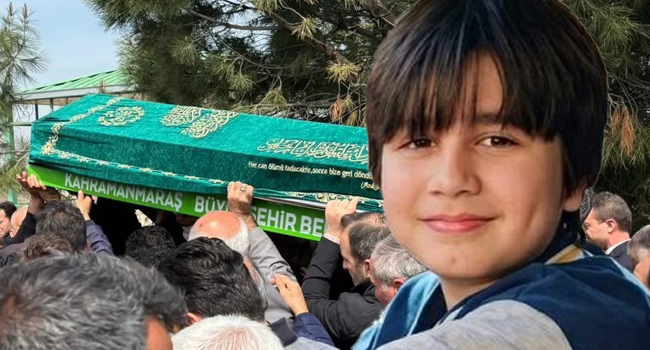
An 11-year-old boy killed in a school shooting in southeastern Turkey last week and his family faced discriminatory treatment in an official notification and at his funeral because his father had been dismissed from the civil service and later convicted of alleged links to the Gülen movement, the Stockholm Center for Freedom reported.
Claims of discrimination first emerged after Yusuf Tarık Gül’s name appeared in lowercase and in parentheses on an official victims list circulating on social media, unlike the names of other victims, which were written in capital letters.
KHK’lı babanın çocuğunun Yusuf Tarık Gül ismi neden küçük harflerle ve parantez içinde yazıldı? @saglikbakanligi @Yusuf__Tekin Bu yaptığınız nefret suçu ve fişlemedir. Acıların üstünde tepinmeyin! pic.twitter.com/8neb5UyPep
— 𝓔𝔂𝓵𝓾̈𝓵 𝓓𝓮𝓷𝓲𝔃 💛♥️🎼📚📷🍀 (@eylulumdenizim) April 16, 2026
The allegations of discrimination deepened when no senior government officials attended Yusuf Tarık’s funeral, while ministers attended those of other victims. A list shared on social media showed that several cabinet members were assigned to each of the other funerals, but none to his.
KHK'lı çocuğu diye cenazesine hiçbir yetkili katılmamış. Kelimeler kifayetsiz… pic.twitter.com/vs9OXwCrR8
— ADEM YAVUZ ARSLAN (@ademyarslan) April 20, 2026
Yusuf Tarık was among nine people killed at a middle school in Kahramanmaraş last week. His father, Burak Gül, was dismissed from the Turkish National Police by an emergency decree over alleged links to the Gülen movement after a 2016 coup attempt, was sentenced to more than six years in prison and released last year.
Opposition lawmaker Turan Çömez criticized the treatment on social media, saying none of the ministers present in Kahramanmaraş attended Yusuf Tarık’s funeral. “Yusuf Tarık Gül was our child, too, just like the others,” he said.
➖1758 gün cezaevinde kaldı ve birkaç ay önce tahliye oldu KHK’lı Burak Gül.
➖Cezaevine girdiğinde oğlu Yusuf Tarık 6 yaşındaydı.
➖Baba Burak Gül, 5 yıl göremediği oğluna sadece birkaç hafta sarılabildi tahliye olduktan sonra.
➖Ve Yusuf Tarık, babasına doyamadan, nereden,… https://t.co/iUpF9ZwBio pic.twitter.com/K8X6oDpBy8— Turhan Çömez (@ComezTurhan) April 20, 2026
Yusuf Tarık’s name and photograph were omitted from some media coverage as well.
The case has renewed debate about the collective punishment of families in Turkey’s post-coup purge era, where state-led stigmatization has often extended beyond the accused to their spouses and children.
Turkish President Recep Tayyip Erdoğan has targeted followers of the Gülen movement, inspired by the late Muslim cleric Fethullah Gülen, since corruption investigations in December 2013 implicated him as well as some members of his family and inner circle. He dismissed the probes as a Gülenist conspiracy and later designated the movement as a terrorist organization in May 2016, intensifying a sweeping crackdown after the coup attempt in July of the same year that he accused Gülen of orchestrating. The movement denies involvement in the failed coup or any terrorist activity.
Following the abortive putsch, the Turkish government declared a state of emergency that remained in effect until July 19, 2018. During this period, the government under the pretext of an anti-coup fight issued government decrees and removed more than 130,000 public servants from their jobs for alleged links to “terrorist organizations” without judicial or parliamentary scrutiny.
Dismissed public servants were also barred from returning to the public sector and from getting a passport. The government made it difficult for them to work in the private sector by adding notes on the social security database that deterred potential employers.