


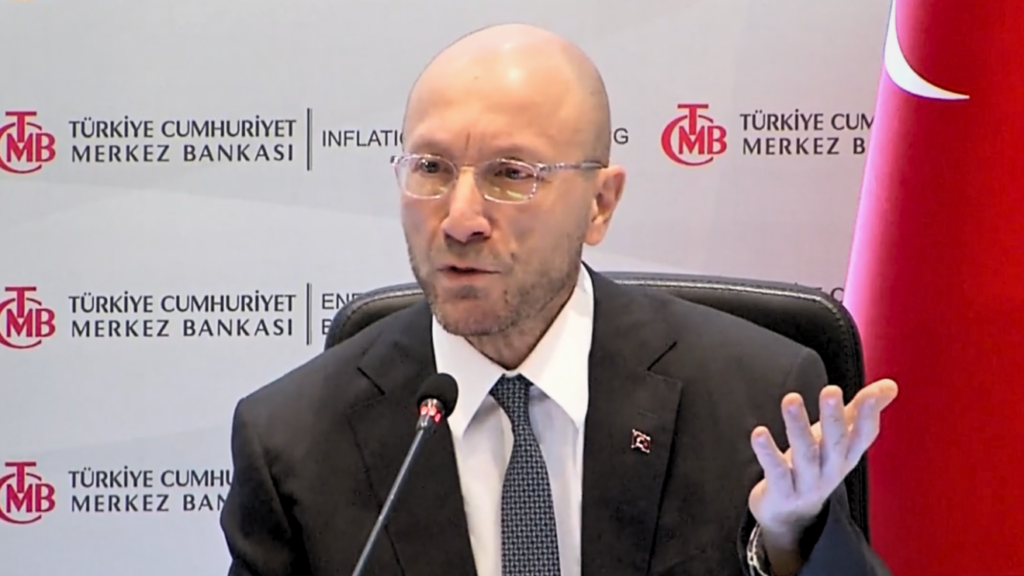
The deputy governor of Turkey’s central bank warned Monday that the economic fallout from the war in the Middle East could go beyond market swings and begin to damage the country’s economic fundamentals, in one of the bank’s starkest public assessments yet of the risks posed by the regional crisis.
The comments came as Turkish authorities have already paused interest rate cuts, tightened liquidity conditions and used reserves to steady markets.
Osman Cevdet Akçay, a deputy governor at the Central Bank of the Republic of Turkey, said in a meeting with journalists on Monday that the current shock looked more dangerous than earlier episodes because it had a greater chance of affecting “fundamentals,” not just market pricing. He said the bank’s earlier steps had been proactive and appropriate and that officials were assessing conditions daily and stood ready to act again if needed.
Akçay also offered an unusual note of self-criticism about the bank’s public messaging, saying the central bank should explain the severity of the situation more clearly and should not try to appear more optimistic than financial markets. He also pointed to broad uncertainty abroad, saying even top global policymakers appeared unsure how events in the region would unfold.
His remarks reflect the strain that the regional conflict has put on Turkey’s economic program, which had been centered on bringing down inflation and rebuilding investor confidence after years of erratic policymaking. Turkey’s central bank paused its easing cycle this month and kept its main policy rate at 37 percent after cutting rates repeatedly since last summer, while also pushing the overnight rate to around 40 percent through liquidity steps meant to defend the lira and contain inflation risks.
The conflict has raised concern in Turkey because the country depends heavily on imported energy, leaving it exposed to oil and natural gas shocks. Finance Minister Mehmet Şimşek and central bank governor Fatih Karahan were due to meet with investors in London this week to stress policy continuity after the war’s economic fallout helped drive a roughly $55 billion drop in Turkey’s total reserves over the last month. Annual inflation stood at 31.5 percent last month, while some analysts have said further energy price increases could force the bank to consider raising its main rate again.
Pressure on reserves has already been visible. Reuters reported last week that the central bank’s gold reserves fell by nearly 50 tons in the biggest weekly decline since August 2018, as the bank sold about $3 billion in gold and carried out large foreign exchange operations to calm markets after the war began on February 28. Bankers cited by Reuters said the bank had also sold about $26 billion in foreign currency since the start of the conflict.
The central bank had entered 2026 trying to preserve a disinflation path after annual inflation slowed from much higher levels in 2024 and 2025. In February it raised its year-end inflation forecast range for 2026 to between 15 and 21 percent while maintaining an interim target of 16 percent, a sign that officials were already dealing with doubts about how durable the slowdown in price growth would prove.