


Ömer Murat*
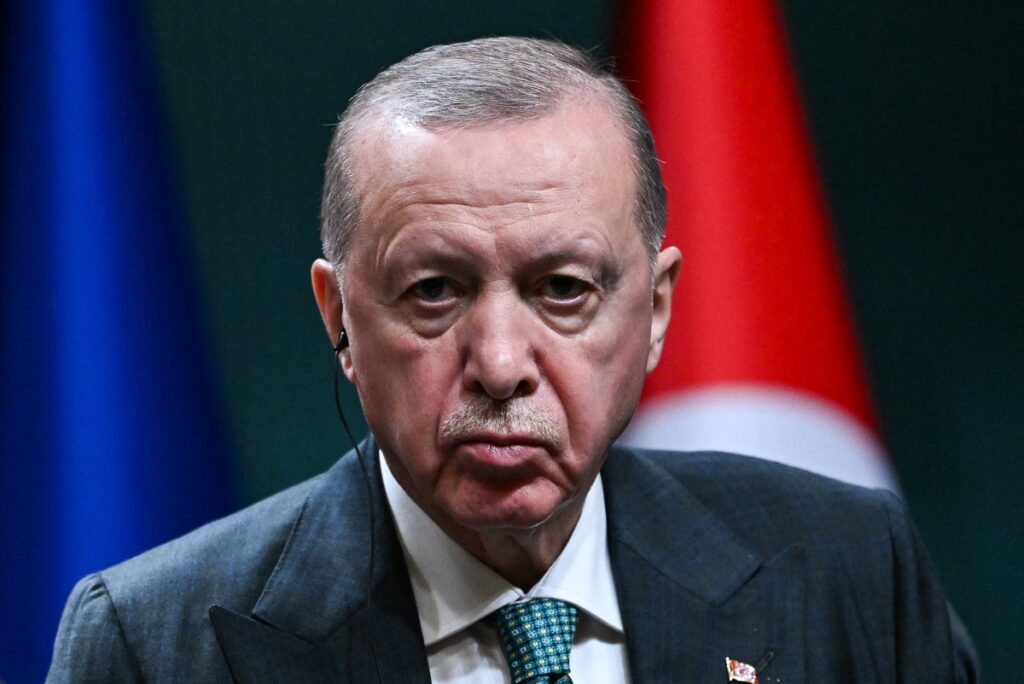
The confrontation between the United States, Israel and Iran is no longer a contained regional crisis: It is fast becoming a stress test for the emerging global order. For Turkey, a NATO member with deep economic vulnerabilities and regional ambitions, the conflict presents a difficult balancing act, one that President Recep Tayyip Erdoğan may not be able to sustain for long.
US President Donald Trump is at the center of this storm. His strategy of brinkmanship — the deliberate escalation of a crisis to force concessions — is being tested to its limits. Critics have long mocked the American president’s tendency to retreat from the brink, coining the acronym “TACO” (Trump Always Chickens Out). However, the standoff with the Islamic Republic of Iran presents a far more rigid obstacle. With both sides entrenched, Trump faces a stark choice: another tactical withdrawal or definitive escalation into ground warfare.
Such an escalation carries profound risks. Iran has already tightened its grip over the Strait of Hormuz, a critical chokepoint for global energy supplies, and has reportedly deployed sea mines to restrict maritime traffic. Military analysts warn that in the event of a full-scale operation targeting the strait, Tehran could render it effectively impassable for an extended period. Clearing such mines could take months, disrupting a substantial share of the world’s oil flows.
The threat is not limited to Hormuz. Iran has demonstrated a willingness to strike alternative energy corridors in the Gulf. Recent attacks on infrastructure linked to the United Arab Emirates, including pipelines designed to bypass Hormuz, underscore the vulnerability of global supply chains. Any sustained disruption would ripple through energy markets, intensifying inflationary pressures and destabilizing already fragile economies.
Against this volatile backdrop, Turkey’s position is notable. Erdoğan has skillfully separated his rhetoric, deploying fiery anti-Israel populist language for his domestic audience while avoiding direct criticism of the Trump administration.
This caution is born of necessity. According to a March 2026 survey by MetroPoll, 68 percent of respondents want Turkey to remain neutral in the conflict, 22 percent favor supporting Iran and only 2 percent back aligning with the US and Israel. However, domestic popularity is only part of the story. Erdoğan’s restraint toward Washington also reflects other urgent considerations. Under normal circumstances, he might exploit anti-Western sentiment, but a critical legal matter in New York appears to have constrained him.
The long-running case involving Halkbank (Türkiye Halk Bankası A.Ş.) has emerged as a critical source of American leverage over Erdoğan. The issue reportedly topped the agenda during his recent visit to the White House, and after more than nine years, in the second week of the war, the US Department of Justice signaled its willingness to move toward a settlement through a deferred prosecution agreement. Under this framework, an independent monitor appointed by US authorities would oversee the bank’s operations for three months and issue regular compliance reports.
The case, which involves allegations of sanctions-busting transactions that implicate figures close to Erdoğan, has become deeply politicized. Any deterioration in Turkish-American relations in the coming weeks could jeopardize the outcome Erdoğan seeks. It is hardly surprising that the Turkish leader has worked to maintain cordial relations with Trump. Maintaining a “wonderful” relationship with the US president, as Trump recently described it, has become central to securing an outcome that protects both Erdoğan and his inner circle.
That effort appears to have borne fruit. On Friday, Trump praised Turkey for staying out of certain matters at Washington’s request. In contrast, he said, some other allies had failed to help when needed and would face consequences. These comments have fueled speculation that Turkey’s public neutrality may mask a more accommodating private stance. Should the conflict intensify, one can expect Trump to press for more explicit Turkish support. Trump probably believes Erdoğan’s recent conduct has given him reason to anticipate compliance.
At the same time, the Turkish leader is trying to strengthen a fragile domestic economy. On March 28, during a World Economic Forum country strategy meeting in Istanbul, Erdoğan met with Laurence Fink, the CEO of BlackRock, in a high-profile meeting. As the head of the world’s largest asset manager, overseeing roughly $14 trillion, Fink represents the “hot money” flows that Turkey desperately needs to stabilize its currency. Following the outbreak of the Iran conflict, the Central Bank of the Republic of Turkey was forced to sell about $26 billion in foreign currency and liquidate or swap significant gold reserves to support the lira, desperate moves necessitated by a lack of foreign currency. Turkey is not just seeking investment; it is dependent on volatile capital flows that can reverse quickly in times of geopolitical stress.
The war is accelerating bloc formation, and Turkey is being pulled toward the Western side economically, even if politically ambivalent. The pivot toward Western financial titans like BlackRock suggests that despite the global drift toward a new bloc system in which Iran receives covert backing from Russia and China, Turkey is fighting to remain anchored to the Western financial architecture. For now, Erdoğan is betting that he can satisfy the public with rhetoric while securing his future through quiet cooperation with Washington and Wall Street.
However, for Ankara, the question of alignment is becoming increasingly difficult to avoid. While recent signals suggest a tilt toward the West, Turkey is also exploring a more active role in regional security arrangements. Talks involving Turkey, Saudi Arabia, Egypt and Pakistan point to an effort to create a counterweight to Iran, given the absence of a reliable US security umbrella. Pakistan’s involvement, given its nuclear capabilities, adds another layer of deterrence to this emerging framework.
Yet uncertainties abound. The Gulf states, which have long relied on US protection, now find themselves exposed to Iranian retaliation. Washington’s inability or unwillingness to fully protect its partners has prompted the search for alternative security guarantees. Whether the US will tolerate a dilution of its influence in a region that accounts for a significant share of global energy reserves remains an open question.
Much depends on the next phase of the conflict. Should Washington proceed with a ground operation, pressure on Turkey is likely to intensify. Trump has already indicated a willingness to use US military facilities in allied countries even without explicit approval, raising the prospect that Ankara could be drawn in regardless of its preferences.
This would force Erdoğan to choose between aligning more openly with Washington and risking domestic backlash and regional repercussions, or resisting and straining ties with a transactional US administration. Either path carries significant risks. For Erdoğan, the tightrope grows narrower with every escalation.
For now, Turkey’s balancing act provides a measure of flexibility. However, that room for maneuver is shrinking. As the crisis deepens, Ankara may soon be forced to decide where it stands in this conflict and where it belongs in an increasingly polarized global order.
* Ömer Murat is a political analyst and a former Turkish diplomat who currently lives in Germany.
Disclaimer: The views expressed in this opinion piece are those of the author and do not necessarily reflect the editorial stance of Turkish Minute.