


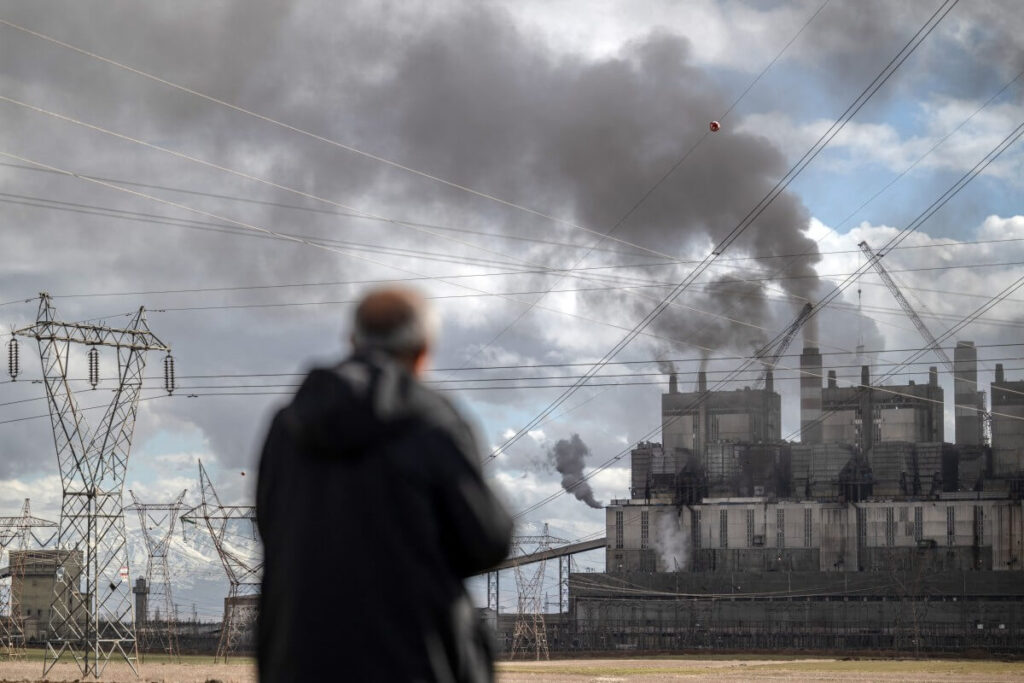
Turkey was home to five of Europe’s 10 most polluted cities in 2025, with the eastern city of Iğdır ranking as the most polluted, according to a Euronews report citing an international air quality study.
Data from Swiss monitoring group IQAir’s 2025 World Air Quality Report showed that Turkey accounted for half of the 10 most polluted cities in Europe. Iğdır recorded an annual average PM2.5 concentration of 64.4 micrograms per cubic meter, far exceeding the World Health Organization’s (WHO) guideline of five micrograms per cubic meter.
İzmir’s Buca district ranked second with 51.5 micrograms per cubic meter, while Gödekli in Konya province, along with the cities of Konya and Düzce, also appeared on the list.
The report analyzed 2,303 cities across 43 European countries. Of these, 1,182 recorded an increase in annual average PM2.5 levels, while 886 saw decreases. Only 104 cities met the WHO’s recommended limit.
Across Europe, eight countries — Bosnia and Herzegovina, North Macedonia, Serbia, Turkey, Moldova, Romania, Montenegro and Poland — recorded PM2.5 levels above 15 micrograms per cubic meter. Turkey stood out for having the highest number of cities among the worst-affected.
Experts attribute Turkey’s high pollution levels to fossil fuel use, industrial emissions, heavy traffic and weather conditions that trap pollutants close to the ground. The widespread use of coal for power generation and heating, along with inefficient stoves, further worsens air quality.
Turkey aims to reach net-zero emissions by 2053, but coal still accounted for 33.6 percent of the resources used in electricity generation last year, official data show.
Outside Turkey, Serbia’s Novi Pazar ranked third with 34.1 micrograms per cubic meter while Bosnia and Herzegovina’s Prijedor placed fifth. Gorazde and Gracanica also ranked among the top 10, along with Serbia’s Cacak.
At the other end of the scale, Finland dominated the list of Europe’s least polluted cities, accounting for five of the top 10. The island of Utö ranked first with 1.3 micrograms per cubic meter followed by Muonio and Kittilä, while Ranua and Nivala also appeared on the list.
Experts say Finland’s low population density, favorable geography and strict emissions controls contribute to its cleaner air, along with renewable energy use exceeding 50 percent.
Iceland’s Sandgerdi ranked fourth among the cleanest cities, while Sweden’s Bredkalen, Portugal’s Faro and Iceland’s Alftanes were also included in the top 10.
PM2.5 particles are small enough to enter the lungs and bloodstream and are linked to respiratory and cardiovascular diseases as well as cancer.
According to the WHO, air pollution causes an estimated 7 million deaths worldwide each year and is among the leading risk factors for mortality in Turkey.