


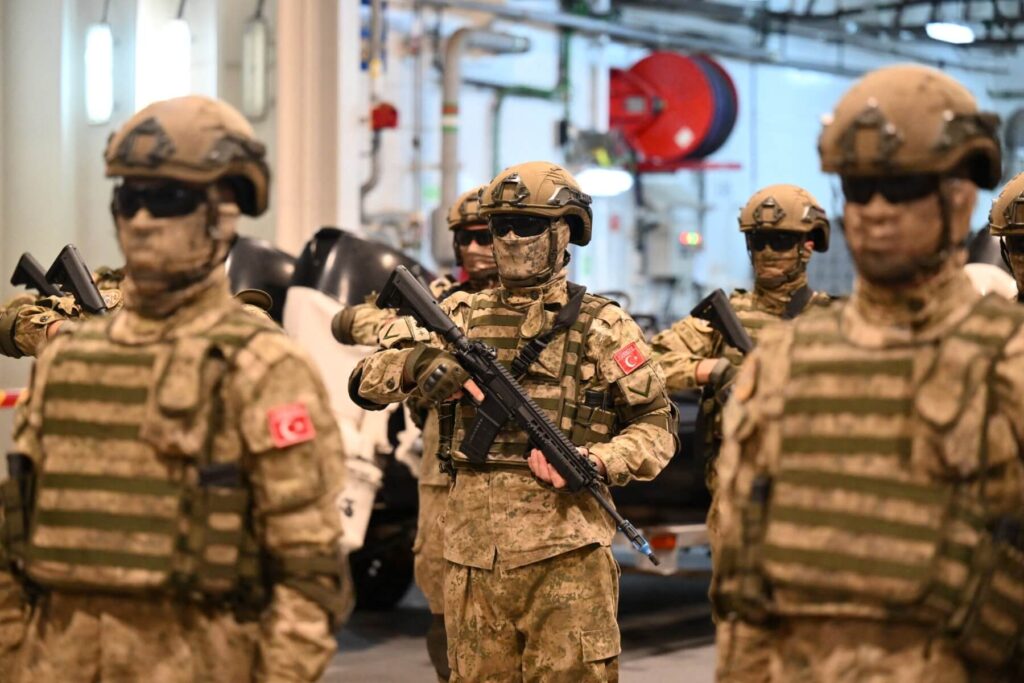
Turkey’s Defense Ministry has confirmed plans for NATO to establish a new multinational corps headquarters in the country, saying the initiative began before recent regional tensions and is not linked to the Iran war.
The statement came during the ministry’s weekly press briefing on Thursday following questions raised in parliament by an opposition lawmaker about the reported headquarters.
The issue first came to public attention earlier this week after the Cumhuriyet newspaper reported claims about the planned multinational corps headquarters in Turkey.
The ministry said work on the project began in 2023 under NATO’s Southeastern Regional Plan and that Turkey formally notified NATO of its intent in 2024. The host country initiates and proposes the corps in such cases, and the unit is then integrated into NATO’s force structure once approved.
NATO’s Southeastern Regional Plan is part of a new generation of defense plans agreed at the alliance’s 2023 Vilnius summit, aimed at strengthening deterrence and defense on NATO’s eastern flank, with a focus on the Black Sea and the Mediterranean.
The planned headquarters will be commanded by a Turkish general and will operate as a multinational NATO structure, the ministry said, adding that coordination with NATO authorities is ongoing and that the approval process has not yet been completed.
According to the ministry, the headquarters will support deterrence and defense activities in its area of responsibility by ensuring the integration of assigned forces under NATO’s regional plans.
The ministry said the initiative is not related to recent developments in the region.
The issue was brought to parliament by main opposition Republican People’s Party (CHP) lawmaker Hasan Öztürkmen, who questioned the timing of the plan amid heightened tensions involving Iran, calling for greater transparency.
Regional tensions have escalated since late February, when the United States and Israel began to launch joint strikes on Iran. Tehran has responded with retaliatory attacks targeting Israel as well as US assets in Gulf countries.
Since the start of the war, three Iranian missiles heading toward Turkey have been intercepted by NATO air defense systems, highlighting the risk of spillover into neighboring countries.
Turkey, a NATO member since 1952, has the alliance’s second-largest army and hosts key NATO facilities, including the Allied Land Command in İzmir. The country has also supported NATO operations through bases such as İncirlik and Konya, with the latter hosting Airborne Warning and Control System (AWACS) surveillance aircraft, while a missile defense radar in Kürecik in the eastern province of Malatya has been part of NATO’s system since 2012.
Amid the heightened threat, NATO has reinforced Turkey’s air defenses. The Defense Ministry said last week that a new Patriot missile battery had been deployed at İncirlik Air Base in addition to an existing Spanish system, while additional Patriot systems were also sent to the Malatya region near the Kürecik radar base after earlier interceptions.
Separately, the ministry announced that Turkish troops deployed in Iraq as part of the NATO mission have been withdrawn.
It said NATO had decided to pull back its Iraq mission due to recent developments in the region and that Turkish Armed Forces personnel stationed in Baghdad had been safely evacuated.