

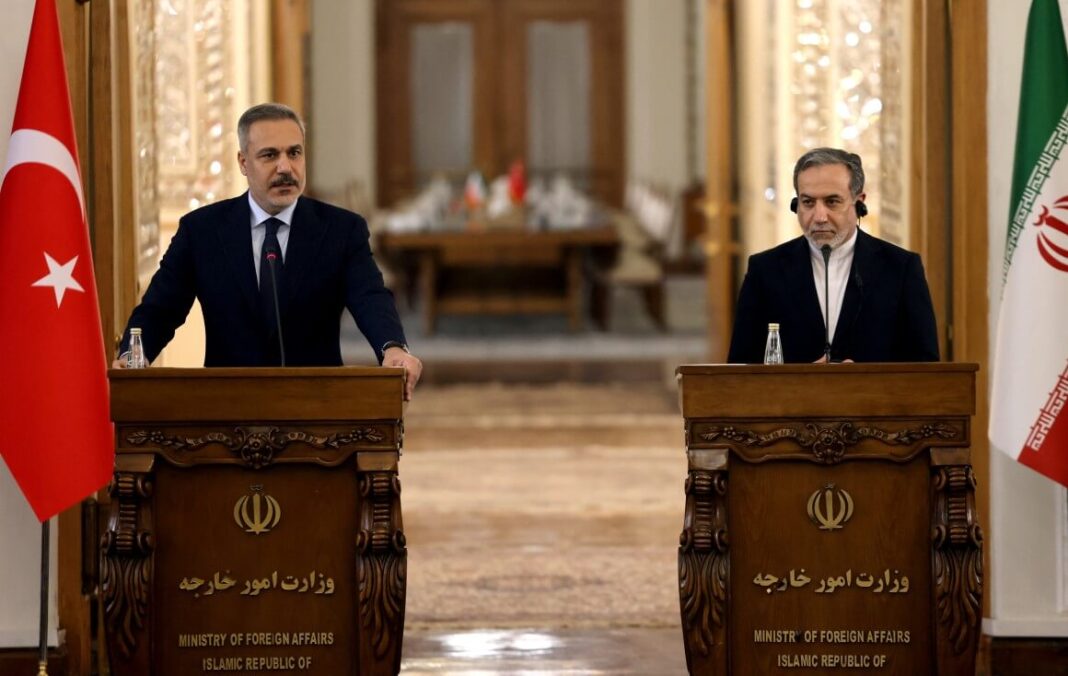

Turkey has joined Egypt and Pakistan in mediating between the United States and Iran amid escalating tensions over the Strait of Hormuz, as US President Donald Trump delayed planned military strikes on Iran, Axios reported.
The mediation efforts come as Washington and Tehran appeared to step back from the brink of further escalation. Trump said on Monday he had ordered a five-day pause on potential strikes against Iran’s energy infrastructure, citing what he described as progress in discussions aimed at reopening the strategic waterway.
The decision followed a weekend ultimatum in which Trump warned that the United States would launch attacks within 48 hours if Iran did not reopen the Strait of Hormuz, a key global oil transit route.
🚨Turkey, Egypt, and Pakistan have been passing messages between the U.S. and Iran over the past two days in an effort to de-escalate, U.S. source says
🚨Senior officials from the three countries held separate talks with White House envoy Steve Witkoff and Iranian Foreign… https://t.co/4ZEFMt1ruq— Barak Ravid (@BarakRavid) March 23, 2026
Iran responded with threats to target electricity infrastructure in Israel and the Gulf countries, raising fears of a broader regional conflict.
Against this backdrop, Turkey has emerged as an active diplomatic intermediary. A US source told Axios that Turkey, Egypt and Pakistan have been passing messages between Washington and Tehran over the past two days as part of efforts to reduce tensions.
According to the report, the foreign ministers of the three countries had separate talks with White House envoy Steve Witkoff and Iranian Foreign Minister Abbas Araghchi, making a coordinated push to open channels of communication.
Separately, Turkish Foreign Minister Hakan Fidan has also been engaged in intensive diplomacy. A Turkish diplomatic source told Reuters that Fidan held calls with Araghchi, Egyptian Foreign Minister Badr Abdelatty, EU foreign policy chief Kaja Kallas and US officials to discuss steps to end the war.
These diplomatic contacts are taking place as global markets react sharply to developments in the crisis.
The standoff has rattled energy markets, with the effective closure of the Strait of Hormuz, a narrow chokepoint through which roughly a fifth of global oil and liquefied natural gas supplies normally pass, triggering the worst oil disruption since the 1970s.
In a post on Truth Social, Trump said the United States and Iran had held very good and productive conversation over the past two days and indicated that further action would depend on the outcome of ongoing talks.
US stock futures rose and oil prices fell after Trump’s announcement of a pause on Monday, reflecting reduced fears of an imminent military confrontation.
Iran, however, denied that any direct negotiations had taken place. The foreign ministry said there had been no talks with Washington and suggested Trump had stepped back to avoid further spikes in energy prices.
Tehran also says that the Strait of Hormuz remains open, except to the United States and its allies, despite effectively restricting passage following US and Israeli strikes on Iran on February 28.
A source familiar with the mediation efforts told Axios that discussions are focused on ending hostilities and resolving outstanding issues, adding that progress is being made.
Egyptian Foreign Minister Abdelatty also had calls with Witkoff, Araghchi and counterparts from Turkey, Pakistan and Qatar, emphasizing the need to contain the conflict and prevent it from spreading, Egypt’s foreign ministry said.
The White House did not immediately respond to a request for comment, Axios reported.
Axios was launched in 2016 by former Politico journalists Jim VandeHei, Mike Allen and Roy Schwartz. It covers business, politics, technology, healthcare and media.