


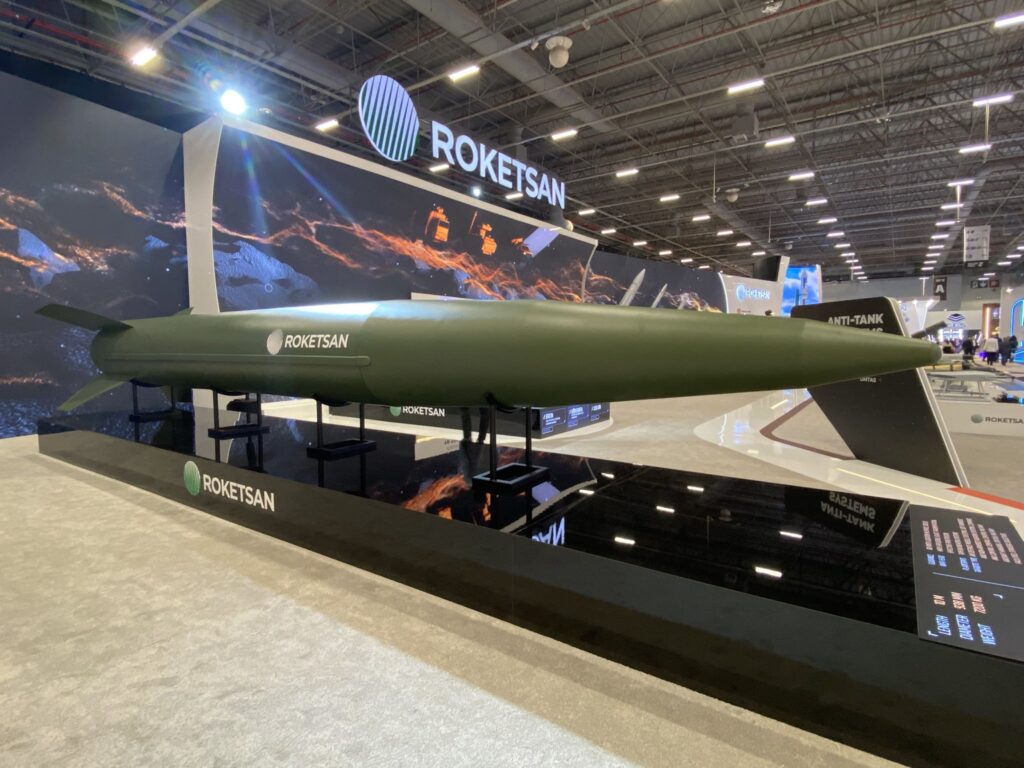
Turkey has an estimated inventory of 322 ballistic missiles, ranking seventh globally in ballistic missile inventory and placing it ahead of countries such as India, South Korea and France, according to data compiled by the Sözcü daily based on figures from the Stockholm International Peace Research Institute (SIPRI).
The inventory includes US-made MGM-140 Army Tactical Missile System (ATACMS) Block 1 missiles as well as domestically developed systems such as the J-600T Yıldırım (Lightning) I and II, Bora (Storm) and Tayfun (Typhoon).
Turkey’s missile capabilities are the result of a program launched by the Turkish Armed Forces (TSK) in the 1990s. Early development focused on the Yıldırım missile, produced in cooperation with China with a range of about 150 kilometers.
This capability was later expanded with the Bora missile, developed by Roketsan, Turkey’s leading missile and rocket manufacturer, through technology cooperation with state-owned Chinese defense contractor China Precision Machinery Import-Export Corporation (CPMIEC), reaching a range of around 300 kilometers.
The Tayfun missile represents the most advanced stage of this program and currently has the longest range among systems developed by Turkey’s defense industry.
Turkey carried out a test launch of the Tayfun short-range ballistic missile over the Black Sea in October 2022, with the missile reportedly reaching a distance of 561 kilometers.
According to Roketsan, the system is designed as a mobile-launched deep-strike platform with high speed and precision guidance aimed at reducing collateral damage and evading air defense systems.
Some analysts describe more advanced variants of Tayfun as having maneuverable capabilities in the terminal phase, allowing the missile to adjust its trajectory before impact.
President Recep Tayyip Erdoğan has said the current range of around 565 kilometers is not sufficient and that Turkey aims to extend it to 1,000 kilometers.
The development of the Tayfun also marks a shift toward greater self-reliance in missile production. While the Missile Technology Control Regime (MTCR) does not ban domestic development, its restrictions on technology transfers for systems capable of carrying a 500-kilogram payload over 300 kilometers have encouraged countries such as Turkey to expand indigenous capabilities.
Turkey’s missile inventory places it above several countries with larger defense budgets. South Korea and Egypt each have around 190 ballistic missiles, Greece 165 and Pakistan 126. France and the United Kingdom each have 64 ballistic missiles, although with significantly longer ranges of roughly 6,000 and 12,000 kilometers, respectively.
China leads globally with approximately 3,100 ballistic missiles, followed by Russia with 1,400 and the United States with 1,300. North Korea ranks fourth with around 1,000 missiles, followed by Israel with 850 and Iran with 800.
Ballistic missiles travel along a high-speed trajectory after launch, carrying a warhead over long distances before re-entering the atmosphere at high velocity, making them difficult to intercept.