

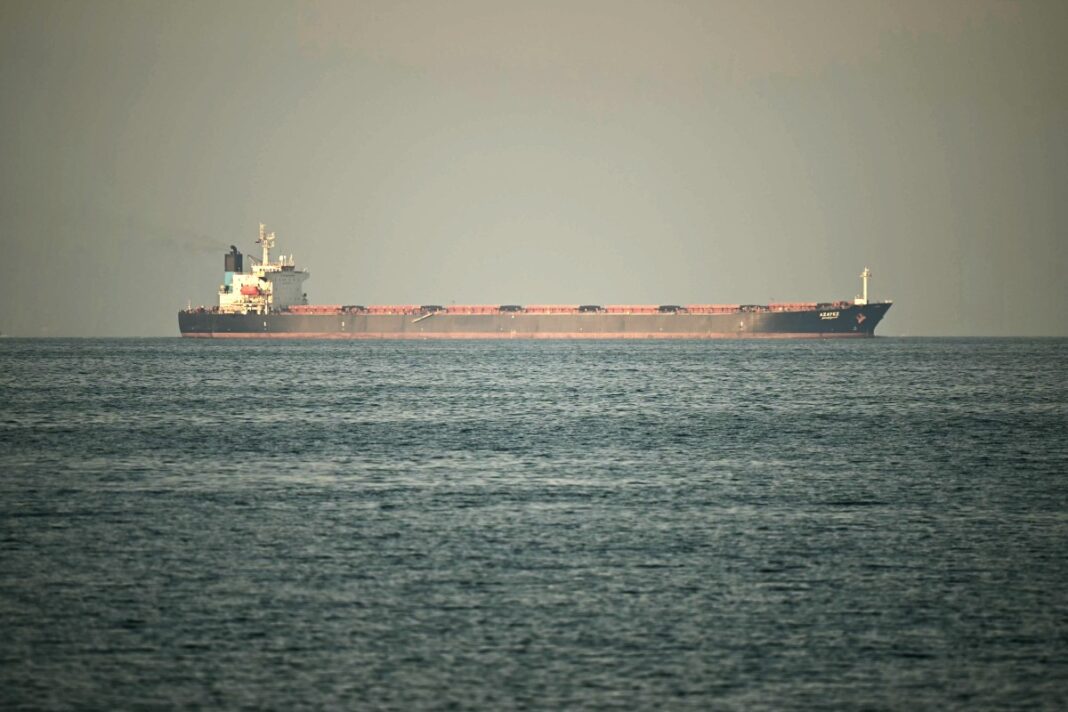
.)
Disruptions to shipping through the Strait of Hormuz could increase Turkey’s energy import bill and put pressure on industrial supply chains, agriculture and logistics, according to a new analysis by the Ankara-based Economic Policy Research Foundation of Turkey (TEPAV).
The report says the primary risk for Turkey is not a complete supply cutoff but rising costs, delivery delays and declining export competitiveness across multiple sectors.
According to the analysis the crisis triggered by US and Israeli military strikes on Iran that began on February 28 and Iran’s retaliatory strikes on US assets in Gulf countries have created risks extending beyond oil prices, potentially affecting petrochemical inputs, fertilizer supplies and shipping costs that are critical for Turkey’s industrial production and trade.
The Strait of Hormuz is one of the world’s most strategic energy chokepoints, carrying roughly 20 percent of global oil trade and about one-fifth of liquefied natural gas (LNG) shipments. Oil prices have fluctuated between $85 and $120 per barrel since the conflict began, the report said.
The International Energy Agency (IEA) has decided to release approximately 400 million barrels of strategic reserves over 120 days to cushion the supply shock, with Turkey contributing 11.6 million barrels.
For Turkey the most immediate macroeconomic impact could come from higher energy costs. The country’s annual energy import bill stands at around $60–$65 billion, and TEPAV estimates that every $10 increase in oil and gas prices could increase the current account deficit by about $4.5–$5 billion.
Oil prices stabilizing in the $90–$100 range have already invalidated the $65-per-barrel assumption used in Turkey’s 2026 budget and Medium-Term Program, the report said. The reintroduction of the sliding-scale fuel tax and the release of strategic oil stocks on March 5 have also reduced fuel tax revenue, adding pressure to fiscal balances.
Beyond energy prices, the report highlights vulnerabilities in Turkey’s industrial supply chains. Turkey imports between $700 million and $1 billion worth of aluminum and aluminum products annually from Gulf producers such as Bahrain, Qatar, the United Arab Emirates and Oman. Petrochemical inputs from the same region amount to roughly $2 billion per year.
These materials are typically shipped from ports in the Persian Gulf and pass through the Strait of Hormuz before reaching Turkey, meaning any sustained disruption to maritime traffic could create logistical bottlenecks for industrial inputs.
Another key raw material at risk is monoethylene glycol (MEG), a feedstock used in polyester fiber and PET production. Turkey imports roughly $700–$900 million worth of MEG annually, with about 35–40 percent of supplies coming from Gulf producers. Supply disruptions or higher transport costs could raise production costs in Turkey’s textile, apparel and packaging industries, sectors that generate more than $30 billion in annual exports.
The crisis could also affect Turkey’s agricultural sector through higher fertilizer costs. Turkey consumes roughly 6–7 million tons of chemical fertilizers annually, with imports accounting for a large share of supply. Gulf countries account for between 15 and 25 percent of Turkey’s nitrogen fertilizer imports.
Turkey has already taken emergency measures to protect domestic fertilizer supplies. The Ministry of Trade halted urea exports and transit shipments on March 7, while the Ministry of Agriculture and Forestry increased fertilizer stocks, explored alternative suppliers and removed duty on urea imports.
Higher energy prices and logistical disruptions could push fertilizer costs further, increasing production costs for key crops such as wheat, corn and sunflower and potentially feeding into food inflation. Turkey’s agricultural sector contracted by about 8.8 percent in 2025, according to the report, citing Turkish Statistical Institute (TurkStat) data.
Shipping costs are also rising after the Strait of Hormuz was designated a high-risk maritime zone. War risk insurance premiums for tankers passing through the strait have risen from about 0.25 percent to as much as 3 percent of vessel value, while spot charter rates for LNG carriers have reportedly surged by about 600 percent to roughly $300,000 per day.
Rising freight costs and longer shipping routes could increase trade expenses and complicate delivery schedules for Turkish exporters in sectors such as textiles, machinery, automotive components and household appliances.
However, Turkey’s access to alternative suppliers in Russia, North Africa and Central Asia, along with the possible resumption of Iraqi oil flows through the Kirkuk–Ceyhan pipeline, could limit the risk of a physical supply disruption in the short term.
The report also said disruptions in Far East and Gulf-based supply chains could accelerate nearshoring in European industry, potentially positioning Turkey as a regional production hub due to its industrial base, logistics capacity and proximity to European markets.
TEPAV is an independent think tank founded in 2004 that conducts policy research on issues including economic reform, trade and regional development. Its analyses are frequently cited by policymakers, businesses and international organizations.