


Attacks on compressor stations in southern Russia that help feed gas into the TurkStream and Blue Stream pipelines could affect supplies to Turkey as well as parts of Europe, a Russian energy expert said in remarks published by Russian news outlet NSN on Wednesday.
The comments came after Gazprom said 12 attacks had targeted infrastructure linked to the two export routes over the previous two weeks, including the Russkaya, Beregovaya and Kazachya stations, blaming Ukraine for the attacks.
Igor Yushkov, an expert at Russia’s National Energy Security Fund, said gas from the Kazachya station moves to the Russkaya station, which provides pressure for deliveries through TurkStream to the European part of Turkey. He also said the Beregovaya station serves as the starting point of Blue Stream, which supplies eastern Turkey.
“If these stations are shut down, not only Europe but Turkey could also be left without gas,” Yushkov said.
Gazprom said that all of the attacks had been repelled and that flows through the pipelines had continued.
The warning points to Turkey’s continued reliance on Russian pipeline gas even as Ankara has expanded other supply routes. Turkey also imports gas from Azerbaijan and Iran and has large liquefied natural gas import capacity, which would make a total cutoff less likely even if one route were disrupted.
Turkey is seeking to diversify its gas supply with more domestic production and more liquefied natural gas imports while reducing reliance on Russian and Iranian gas over time.
Yushkov also said a wider disruption could tighten gas markets already strained by the Middle East conflict, arguing that if pipeline gas volumes were lost, Turkey and European buyers would have to turn more heavily to liquefied natural gas.
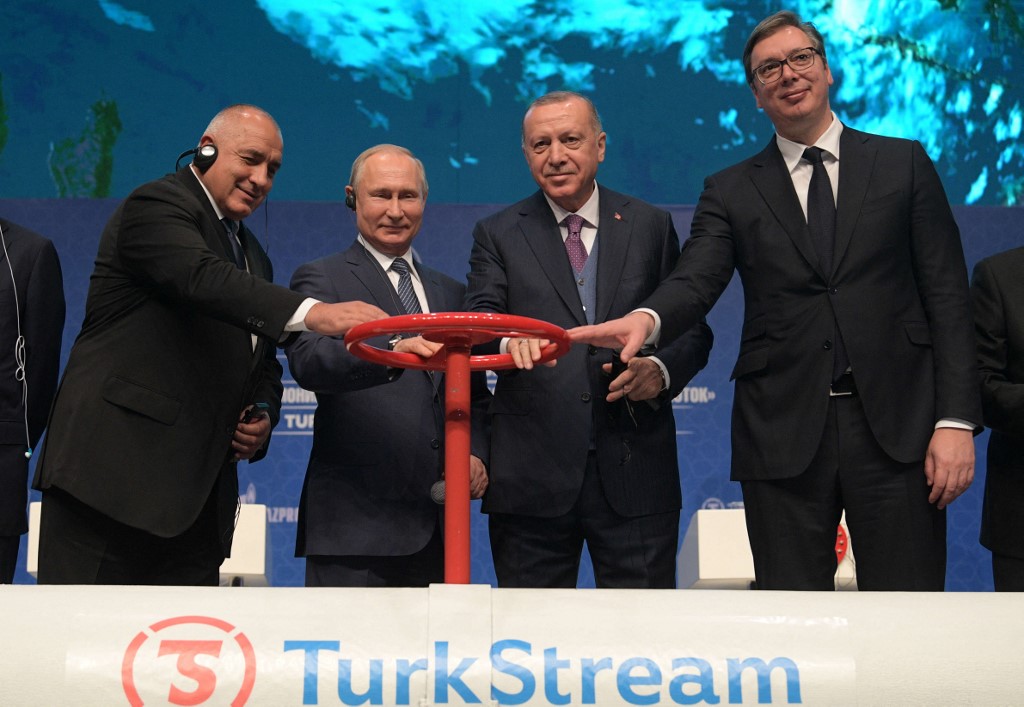
TurkStream, which began operations in January 2020, is now Russia’s only remaining route for pipeline gas to Europe through Turkey. Countries including Turkey, Serbia, Hungary and Slovakia still receive gas through the line, making the infrastructure important both for Ankara’s domestic supply and for residual Russian exports to Europe.