


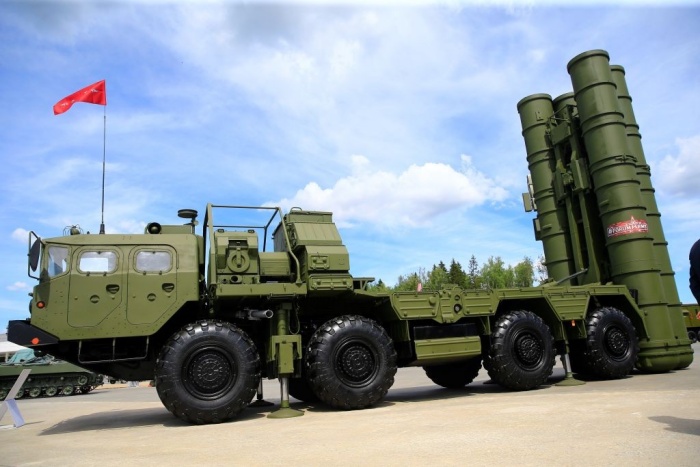
Turkey’s defense ministry said Thursday that the “fastest” and “most suitable” interceptor was automatically chosen to engage two Iranian ballistic missiles headed for Turkey this month, responding to public questions about why Ankara did not use its Russian-made S-400 air defense system in a real missile threat.
The ministry said Turkey’s air and missile defense is run through a multilayered structure based on threat assessments and operational needs and that the country is part of NATO’s integrated air and missile defense system, made up of early warning sensors, command and control systems and interceptor missiles. It said that when a ballistic missile is detected, the system automatically selects and fires the “most suitable and fastest” interceptor because the response window is very short.
The remarks came after Turkey said NATO-linked defenses intercepted Iranian ballistic missiles that entered its airspace on March 4 and March 9, amid a growing conflict that began with US and Israeli strikes on Iran and then expanded with Iranian retaliation. The first missile was intercepted over the eastern Mediterranean after crossing Iraqi and Syrian airspace, while the second was also shot down before it could hit Turkish territory. Debris fell in southern and southeastern Turkey, but Turkish officials said there were no deaths or injuries.
The ministry’s answer addressed the immediate tactical question of how the interceptions were handled, but it left open the broader issue that has followed the S-400 purchase since Turkey received the first deliveries from Russia in 2019: The system is not integrated into NATO’s shared air and missile defense architecture. Then-NATO secretary general Jens Stoltenberg said in 2019 that the S-400 was “not possible to integrate” into NATO’s integrated air and missile defense system, which depends on a shared radar picture and joint capabilities.
That distinction matters because Turkey’s explanation suggested that the missile tracks were handled through the NATO-linked network already in place, not through the Russian system Ankara bought despite years of warnings from Washington and other allies. The United States removed Turkey from the F-35 joint strike fighter program over the purchase and imposed sanctions in 2020, arguing that the Russian system posed risks to NATO interoperability and to the stealth jet’s security.
Turkey has long rejected that criticism, saying the S-400 purchase was a sovereign decision and insisting the system would not be integrated into NATO networks. In December, Turkey’s defense ministry said there had been “no change” in its position on the S-400s even as talks with Washington continued over a possible return to the F-35 program.
The ministry did not say Thursday whether the S-400s were inactive, on standby or simply outside the interception chain used during the two missile incidents. Instead, it argued that the correct defensive asset had been selected under the operational picture at the time. The interceptions prompted a debate in Turkey over why the Russian system, acquired at major diplomatic and financial cost, remains sidelined when the country faces an actual ballistic missile threat.
In the same briefing, the ministry said a Patriot air defense system assigned by NATO Allied Air Command in Ramstein, Germany, was being deployed to Malatya as a complementary part of Turkey’s air defense architecture. That added to the impression that, as tensions rise on Turkey’s southern flank, Ankara is leaning on NATO-compatible defenses even as questions persist over the status and role of the S-400s.