


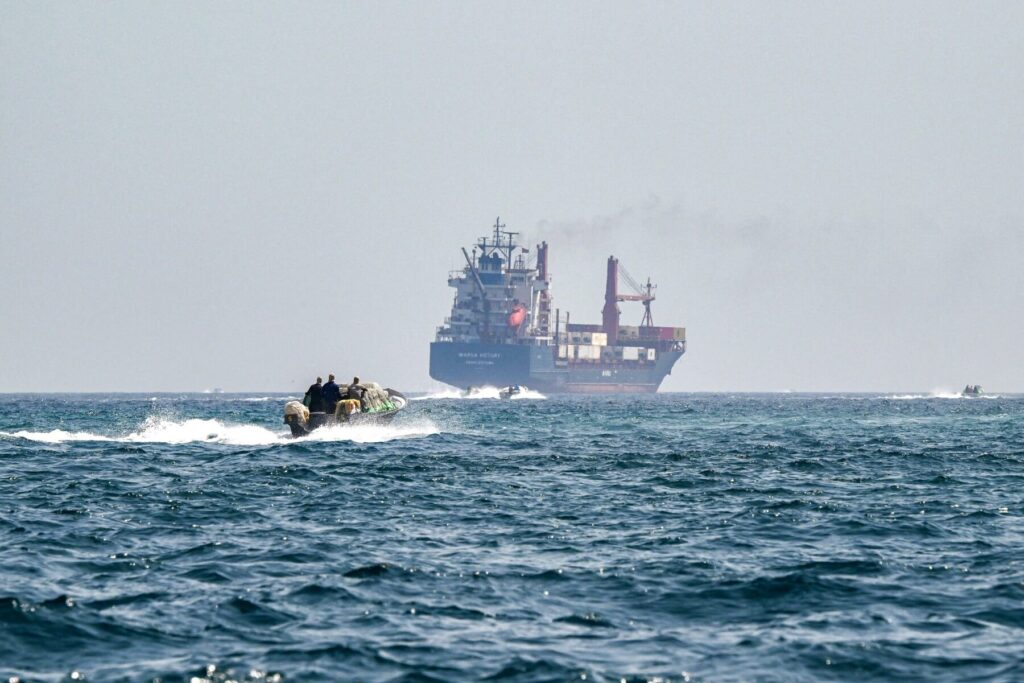
Fifteen Turkish-owned ships are currently waiting in the Strait of Hormuz amid escalating tensions in the Middle East, Turkey’s transportation minister said on Wednesday, adding that the crews are safe and in regular contact with Turkish officials.
Transportation and Infrastructure Minister Abdulkadir Uraloğlu said the vessels were in a holding position in the strategic waterway but had not encountered any security problems.
Speaking to reporters before a parliamentary group meeting of the ruling Justice and Development Party (AKP), Uraloğlu said the government was maintaining regular communication with the ships and their crews.
The Strait of Hormuz, located between Iran and Oman, is the world’s most important energy chokepoint, carrying about one-fifth of global crude oil shipments.
The narrow waterway connects the oil-rich Persian Gulf to global markets, and before the war launched on February 28 by the United States and Israel against Iran — followed by Iranian retaliatory strikes on US assets in Gulf countries — roughly 20 percent of global oil production flowed through it.
“There are 15 Turkish-owned ships waiting in the Strait of Hormuz,” he said. “We are in contact with all the crews. There is no problem.”
Uraloğlu said the vessels were waiting due to conditions in the strait rather than any immediate threat.
“Their only difficulty is that they are waiting there,” he said, adding that their needs were being met. “We are closely monitoring the situation. If the Strait of Hormuz becomes easier to navigate, we will ensure they leave the area.”
Responding to a question about whether any Turkish ships, aircraft or citizens had been harmed in the region, Uraloğlu said there had been no such incidents so far.
“At this moment, none of our citizens, ships or aircraft have been affected,” he said.
Iran’s Islamic Revolutionary Guard Corps (IRGC) now effectively controls the strait along with Iran’s regular navy. It has warned that ships passing through the waterway could be attacked.
Traffic through the channel has been severely disrupted since the start of the conflict.
Reports on Tuesday suggested that Iran has begun laying mines in the waterway, according to two people familiar with US intelligence cited in international media.
US Central Command said in a social media post later Tuesday that US forces destroyed multiple Iranian naval vessels near the Strait of Hormuz, including 16 minelayers.
The disruption has raised concerns about global energy supplies. According to CNN, nearly 15 million barrels per day of crude production and another 4.5 million barrels per day of refined fuels are effectively stranded in the Persian Gulf because of the crisis. Major producers such as Iraq and Kuwait have few alternatives to exporting oil other than through the Strait of Hormuz.
The Group of Seven (G7) major economies has hinted that it could release additional oil supplies to global markets in an effort to offset potential shortages.