


Turkey’s decision to deploy F-16 fighter jets and air defense systems to northern Cyprus carries both security and political implications for the island’s decades-old dispute, analysts have said.
Turkey’s Defense Ministry said on Monday that six F-16s and air defense systems were deployed to the Turkish Republic of Northern Cyprus (KKTC) “within the framework of phased planning to increase the security of the [KKTC] in light of recent developments in our region.”
The move came amid heightened military activity in the eastern Mediterranean following recent US-Israeli strikes on Iran.
Military strategist Kemal Olçar said the deployment should primarily be viewed as a step to strengthen the KKTC’s security and counter what he described as growing militarization on the Greek Cypriot side rather than as a measure directed at Iran.
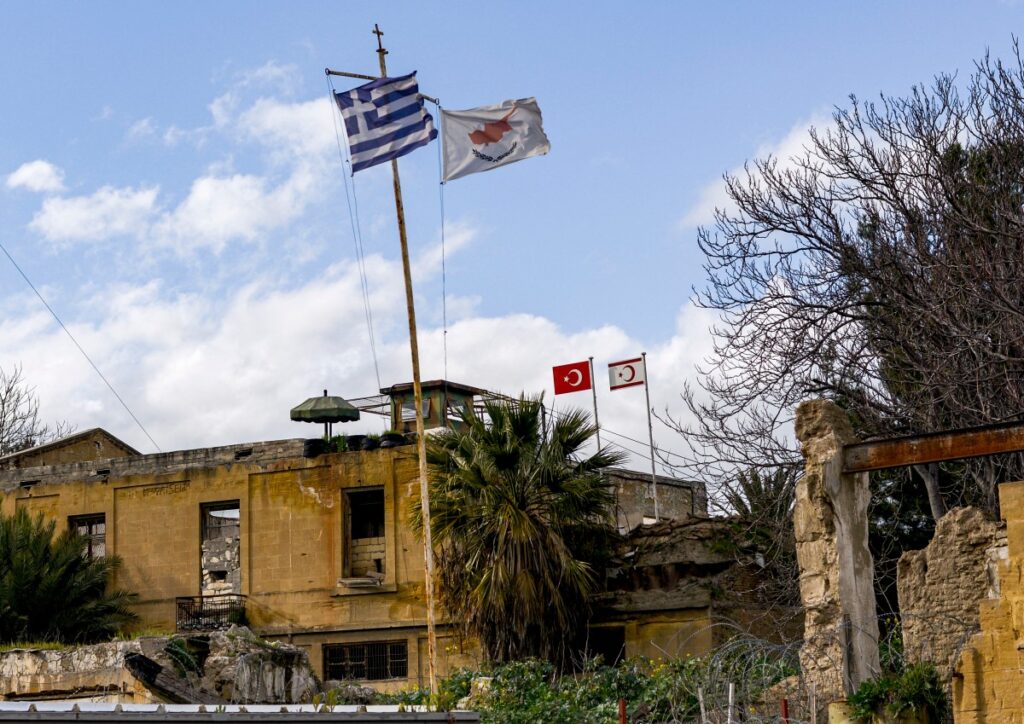
Cyprus has been divided since 1974, when Turkey launched a military intervention following a Greek-backed coup. The Turkish Republic of Northern Cyprus was declared in 1983 but is recognized only by Turkey.
Defense and security analyst Turan Oğuz said the deployment could also carry political implications for the Cyprus issue. Writing on X, Oğuz said Turkey’s move might create “an opportunity” to revive debate over the island’s political future after decades of stalled negotiations.
He claimed that stronger military measures taken by Turkey as a guarantor power could reinforce the view that reunification of the island is becoming increasingly unlikely, potentially making discussions of a two-state arrangement more likely.
Under the 1960 agreements establishing Cyprus’s independence, Turkey, Greece and the United Kingdom serve as guarantor powers.
Government officials also described the deployment as a step aimed at strengthening deterrence in the region.
Ruling Justice and Development Party (AKP) spokesperson Ömer Çelik said sending F-16 fighter jets and air defense systems to northern Cyprus was intended to reinforce the balance of power in the eastern Mediterranean and ensure the security of Turkish Cypriots.
Speaking in a televised interview on Monday, Çelik said the deployment was not directed against any specific country but aimed at protecting Turkey’s rights and interests in the region.
The move followed a drone attack targeting the British Royal Air Force base at Akrotiri in southern Cyprus last week that officials said was believed to have originated from Iran.
Regional military activity has intensified in recent days, with several European countries pledging to send air defenses and other military assets to Cyprus.
Greece deployed F-16 fighter jets and two naval frigates to Cyprus, while France sent the Charles de Gaulle aircraft carrier toward the eastern Mediterranean.
Cyprus President Nikos Christodoulides said visits by European leaders to the island showed that Cyprus’s security is also a concern for the European Union.
Meanwhile, Turkish Cypriot President Tufan Erhürman called for restraint amid rising regional tensions and military deployments around the island.