


Orhan Sait Berber
A theology professor has warned that a controversial Ramadan directive issued by Turkey’s Education Ministry last month risks undermining religious freedom and deepening social polarization if not implemented on a voluntary basis.
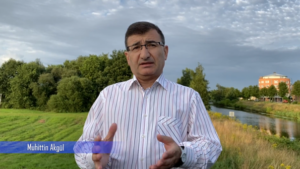
Muhittin Akgül, a Turkish theologian and former faculty member in the Department of Qur’anic Exegesis at Sakarya University’s Faculty of Theology in northwestern Turkey and also an author, told Turkish Minute that the state’s responsibility is to protect freedom of belief for all citizens rather than impose the practices of the majority.
“The duty of the state is not to impose the belief of the majority on everyone, but to safeguard the freedom of all citizens,” Akgül said. “Religion, by its nature, is based on free will, not coercion.”

The directive, issued by Education Minister Yusuf Tekin, instructs schools nationwide — from kindergarten through high school — to organize activities related to the Muslim holy month of Ramadan, which began to be observed on February 19 in Turkey.
The move has reignited debate in Turkey over secularism, religious freedom and the role of religion in public education.
Akgül said that while the majority of Turkey’s population is Muslim and informing students about Ramadan is not inherently problematic, the method of implementation is crucial.
“The state belongs not only to the majority, but also to minorities,” he said, adding that educational institutions should be spaces where differences can exist securely.
‘Politicization of religion may alienate youth’
Akgül warned that religious activities carried out under state authority could create a perception that religion and political power are intertwined, particularly among younger generations.
“Young people often react not to religion itself, but to practices carried out in its name,” Akgül said, adding that perceptions of injustice, weak rule of law and inconsistency in public governance can also shape attitudes toward religion.
His concerns come at a time when survey data point to shifting patterns of religious self-identification in Turkey.
According to research conducted by the KONDA polling company in 2024 on 6,137 respondents and compared to a similar survey in 2008, the percentage of people identifying as “religious” in Turkey declined from 55 percent to 46 percent. Over the same period, those describing themselves as “atheist or non-believer” rose from 2 percent to 8 percent, while the share of respondents identifying as “believers but not religious” increased slightly from 31 percent to 34 percent.
‘Religion is essentially a matter of voluntariness’
For Akgül, who has authored numerous works on Qur’anic interpretation and Islamic thought, the core issue is voluntariness.
“Religion is essentially a matter of voluntariness. Faith cannot be forced, nor can worship be imposed,” he said. “What emerges from coercion is often not belief, but fear or habit.”
The Education Ministry says participation in the Ramadan activities is voluntary and describes the initiative as part of students’ moral and cultural development. Critics, however, question whether participation can genuinely remain voluntary in practice.
Akgül said Ramadan-related activities in schools should be organized on an inclusive and voluntary basis and that students who choose not to participate must not feel marginalized. The state, he added, should remain equally distant from all belief groups in line with secular principles.
Although Turkey is a majority-Muslim nation, it is officially secular. President Recep Tayyip Erdoğan’s repeated declarations about raising “pious generations” have deepened concerns among liberal and secular citizens, who view such ambitions as a threat to the foundational principles of the republic.
Many accuse the ruling Justice and Development Party (AKP) of infringing on personal freedoms and attempting to impose a religious lifestyle through state policy.
The directive has unsettled Turkish opposition parties and education groups. The main opposition Republican People’s Party (CHP) has taken the issue to parliament, claiming that it contradicts the state’s constitutional obligation to remain neutral in matters of religion.
Lawmakers also voiced concern over religiously oriented activities aimed at preschool children.
A publicly released guide also suggests that children ages 4-6 visit mosques accompanied by teachers — a proposal that has sparked concern over developmental and pedagogical boundaries.
Celal Fırat, a lawmaker from the pro-Kurdish Equality and Democracy Party (DEM Party), called for the directive to be withdrawn, citing unease among Alevi citizens and other religious minorities.
An estimated 5 to 10 percent of Turkey’s population follows Alevism.
The Education and Science Workers’ Union (Eğitim-Sen), a major teachers union, criticized the instruction, arguing that public schools serve students from different beliefs and that religion-centered activities can create informal pressure even when described as voluntary.
The controversy has also attracted support from prominent public figures. A joint declaration titled “Defending Secularism Together” was signed by 168 writers, academics and journalists who argued that secular principles in Turkey are being undermined.
Minister Tekin later announced that a lawsuit had been filed against the 168 public figures who signed the statement. President Erdoğan criticized the signatories, denying claims that secularism is under threat and accusing them of double standards.
Akgül said such declarations should be assessed within the framework of freedom of expression.
“The publication of a declaration should primarily be considered in terms of freedom of expression,” he said, arguing that statements that do not incite violence or contain explicit hate speech should not face criminal sanctions in a democratic society.
Since coming to power in 2002, Erdoğan’s AKP has promoted a political agenda deeply intertwined with Islamic values, expanding religious education, promoting Islamic visibility in public life and reinforcing conservative family norms.
Under Erdoğan, the party’s increasingly authoritarian governance and frequent use of Islamist rhetoric, backed by support from various Islamic sects, has alienated many Turks who oppose its interpretation of religion’s role in society.
Tensions have been especially acute over the growing influence of the Directorate of Religious Affairs (Diyanet), which critics view as a vehicle for advancing political Islam.
Many accuse the AKP of infringing on personal freedoms and attempting to impose a religious lifestyle through state policy.