


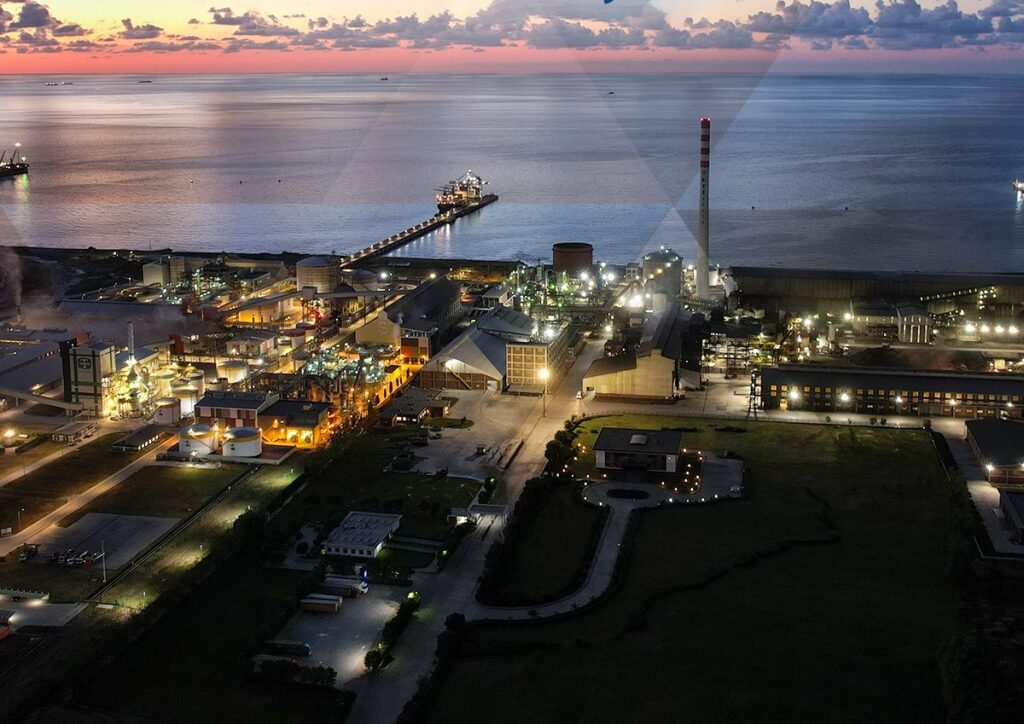
Environmental engineers, local officials and residents in the northern province of Samsun on Tuesday objected to a plan by copper producer Eti Bakır to discharge about 2 million tons of industrial waste a year into the Black Sea.
Eti Bakır is owned by businessman Mehmet Cengiz through Cengiz Holding. Cengiz is a government-aligned billionaire and a close ally of President Recep Tayyip Erdoğan.
The objections came during a public meeting held as part of Turkey’s environmental impact assessment process. The meeting took place at the Samsun provincial office of the Ministry of Environment, Urbanization and Climate Change. Heavy security was present as professional chambers, environmental groups and opposition politicians challenged the project’s scientific basis and the legal change that made the plan possible.
What the company proposes
Eti Bakır operates a copper smelter in the Tekkeköy district on Samsun’s Black Sea coast. The company also runs an integrated fertilizer and metal recovery plant in the Mazıdağı area of Mardin province that produces phosphoric acid, a key input for fertilizer.
The waste at the center of the project is calcium sulfate, also known as gypsum. It is produced when phosphate rock is treated with sulfuric acid to make phosphoric acid. The text provided for this story says about 5 tons of calcium sulfate are generated for every 1 ton of phosphoric acid produced.
Company representatives told the meeting that the waste would be mixed with seawater and discharged through a pipeline to a depth of about 260 meters. They said the discharge point would be in the Black Sea’s “anoxic zone,” a layer with little oxygen and high hydrogen sulfide that is toxic to most marine life.
The regulation change
Opponents focused on a November 2025 amendment to Turkey’s water pollution control regulation. The change authorized the disposal of “non-hazardous inorganic waste” by pipeline into marine areas deeper than 250 meters, the text says.
Kübra Küçük, chair of the Samsun branch of the Chamber of Environmental Engineers, said her organization submitted 23 questions to the ministry and had not received answers. She questioned whether the timing of the regulatory change was linked to Eti Bakır’s environmental impact assessment application.
Scientific concerns raised at the meeting
The Black Sea has a two-layer structure that limits mixing between oxygenated surface waters and deeper hydrogen sulfide-rich waters. Environmental engineers at the meeting said the boundary between the layers is sensitive and that disturbance could push it upward, with effects that could include oxygen loss near the coast, harm to fisheries and conditions that can support mucilage outbreaks.
They warned that discharging millions of tons of industrial byproduct into deep water each year could affect that balance.
Adnan Korkmaz, a local representative of the Chamber of Electrical Engineers and spokesperson for the Samsun Environmental Platform, called the project a risk for the Black Sea.
‘Sea snot’ concerns
Participants cited Turkey’s experience with mucilage, known as “sea snot,” in the Sea of Marmara, which links the Black Sea to the Mediterranean through the Bosporus Strait.
Mucilage forms when algae blooms expand under nutrient pollution and warmer waters, then produce thick layers that can block oxygen and sunlight. The Marmara outbreaks have become a reference point in Turkey’s environmental debates, with critics arguing that weak wastewater treatment and ongoing pollution have left seas vulnerable.
Opponents of Eti Bakır’s plan said any action that adds stress to the Black Sea system could worsen risks already linked to pollution and warming.
Political and local opposition
Representatives of the main opposition Republican People’s Party (CHP) attended the meeting and criticized the plan.
Atila Tekcan, deputy chair of the CHP group on the Samsun City Council, said the project could harm the wider Black Sea ecosystem.
Local officials and activists also argued that the issue has economic stakes for coastal communities, especially fishing.
Cengiz Holding is a large Turkish conglomerate with interests that include construction, energy, mining, aviation and tourism. Its construction unit has taken part in major state-backed infrastructure projects in Turkey.
Mehmet Cengiz is widely seen as one of the businessmen closest to Erdoğan’s government. Opposition politicians have long criticized the company’s record in state tenders and its offshore arrangements highlighted by the 2021 Pandora Papers leak.
The environmental impact assessment report is expected to be submitted to the Ministry of Environment, Urbanization and Climate Change for review. Under Turkish law, the ministry can approve the project, reject it or request changes.
Environmental groups said they would consider legal action if the ministry approves the plan. They argue the November 2025 regulation change conflicts with Turkey’s commitments under regional anti pollution agreements, including the Bucharest Convention on the Protection of the Black Sea Against Pollution.