


Türkmen Terzi, Cape Town
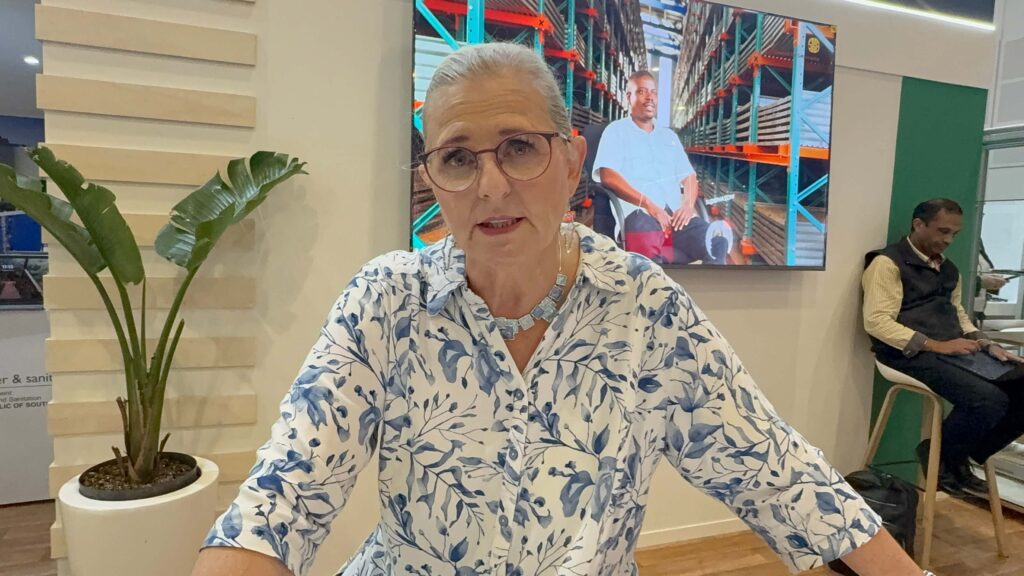
South Africa remains open to Turkish investment despite the collapse of the controversial Karpowership deal, Deputy Minister of Electricity and Energy Samantha Graham-Mare has told Turkish Minute.
She spoke on the sidelines of Investing in African Mining Indaba 2026, held in Cape Town February 9-12.
Her comments came months after the Gauteng Division of the High Court in Pretoria overturned three electricity generation licenses granted in 2021 to İstanbul-based Karpowership by the National Energy Regulator of South Africa.
The licenses were part of a government plan to sign 20-year contracts with the company to supply emergency power through floating gas-fired plants.
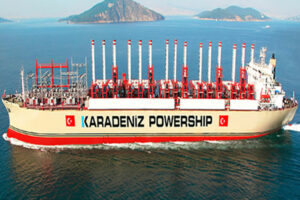

The project had been one of South Africa’s most contentious energy initiatives. Plans to station powerships in Richards Bay, Coega and Saldanha Bay drew criticism from civil society groups, which claimed that emergency procurement procedures introduced during the COVID-19 crisis were used to bypass environmental requirements.
Graham-Mare said the agreement failed not because Karpowership is a Turkish company, but because it did not fit South Africa’s long-term energy strategy. The decision, she said, was based on national priorities and future planning rather than the origin of the investor.
The deal was a record 218 billion rand ($15 billion) energy contract between Karadeniz Holding, a Turkish energy company that owns and operates land-based power plants and Powerships through its Karpowership subsidiary, and South Africa, under the country’s emergency electricity procurement program to prevent periodic blackouts.
She stressed that South Africa remains “open for business” and is not excluding Turkish companies. The government is seeking partners aligned with its renewable energy master plan and broader re-industrialization strategy, particularly in the energy sector. Investment, she added, must support job creation and long-term economic development.
Asked about a recent high-level South African delegation visit to Turkey that included seven ministers and Deputy President Paul Mashatile, Graham-Mare said the trip signaled Pretoria’s willingness to deepen ties with countries interested in partnership. South Africa, she said, is open to cooperation that benefits both sides and helps strengthen its domestic economy.
The interview took place during one of the world’s largest mining investment gatherings. This year’s Mining Indaba drew more than 10,000 delegates, including mining executives, global investors and government officials. Zambia’s president attended as guest of honor.
Turkish participation was visible. Companies including FKK Mining, Kirlioğlu Explosives and KSE Mining exhibited at the event, while other Turkish firms had meetings with African counterparts. Turkey’s ambassador to South Africa, Ayşegül Drama Yıldırım Genç, attended along with Turkish business leaders.
In October Mashatile addressed the South Africa–Turkey Business Council in İstanbul, describing Turkey as a strategic partner and highlighting the launch of the South Africa–Turkey Bi-National Commission in Ankara.
He said bilateral trade reached about $2 billion in 2024 but acknowledged that it remains imbalanced, with South Africa exporting mostly raw minerals and Turkey exporting mainly finished goods.
Although the Karpowership dispute became one of the most high-profile energy controversies in recent years, South African officials are signaling that it should not define broader economic ties.
Graham-Mare’s message to Turkish investors was that South Africa welcomes investment, provided it aligns with long-term industrial strategy, renewable energy goals and domestic job creation priorities.