


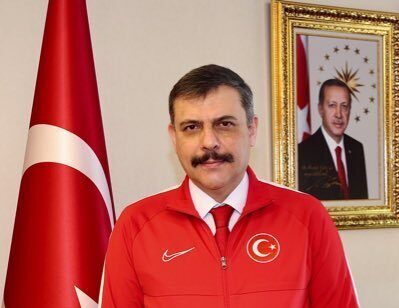
President Recep Tayyip Erdoğan has replaced Interior Minister Ali Yerlikaya with Mustafa Çiftçi, governor of northeastern Erzurum province, elevating a career bureaucrat whose record has attracted scrutiny from secularist and opposition voices over symbolic choices tied to Turkey’s long-running divide over religion and the state.
Çiftçi said after the appointment that he had taken on “a heavy responsibility” and asked for prayers, adding, “May God be with us and help us.”
Çiftçi, 55, had been governor of Erzurum since August 18, 2023. He previously served as governor of Çorum and held district governor posts in five districts. He studied public administration at Ankara University and later completed theology studies.
Criticism of Çiftçi centers on several episodes that critics treat as signals about his worldview.
In February 2021, while governor of Çorum, Çiftçi attended a commemoration for İskilipli Atıf Hoca, a cleric whose legacy remains a flashpoint in debates over the secular foundations of the republic.
The cleric’s legacy remains controversial in Turkey as he is remembered as a leading opponent of the early republic’s secular reforms who advocated for Sharia law and was tried and hanged in 1926 after writing a treatise against Westernization and the adoption of the European-style hats as mandatory wear as opposed to Islamic headgear.
After a public backlash, Çiftçi defended the commemoration and called it “right, justified and necessary.” Criminal complaints were filed over the visit, but prosecutors did not open an investigation.
In Erzurum, Çiftçi sparked controversy after temporarily closing the building where the 1919 Erzurum Congress was held, citing severe damage. The congress is widely seen as a milestone in the movement that led to the founding of modern Turkey under Mustafa Kemal Atatürk. Çiftçi also noted the building’s earlier use as an Armenian school in the Ottoman period and said it could be demolished. After technical inspections and reinforcement work, it reopened as a museum.
Çiftçi is a hafiz, meaning he memorized the Quran, and won a national category in a Quran memorization competition organized by Turkey’s Directorate of Religious Affairs in 2024. He has said he sets aside an hour each day for Quran study.
Erdoğan’s reshuffle removes Yerlikaya after more than two-and-a-half years in the post. Yerlikaya built his tenure around large-scale operations against organized crime and drugs, with frequent public announcements and a heavy social media presence that critics derided as performative.
Yerlikaya regularly announced weekly operations against people accused of links to the faith-based Gülen movement through social media posts that highlighted detention counts and footage of raids.
Critics said the messaging treated accusations as settled and used mass roundups to portray detainees as criminals.
A late flashpoint came after a December 29, 2025, raid in Yalova of an Islamic State cell that turned into an hourslong firefight, leaving three police officers dead. Opposition parties questioned planning and tactics and demanded Yerlikaya’s resignation.
The interior ministry oversees Turkey’s national police, gendarmerie and provincial administration, putting the minister at the center of public order, internal security and migration enforcement.