


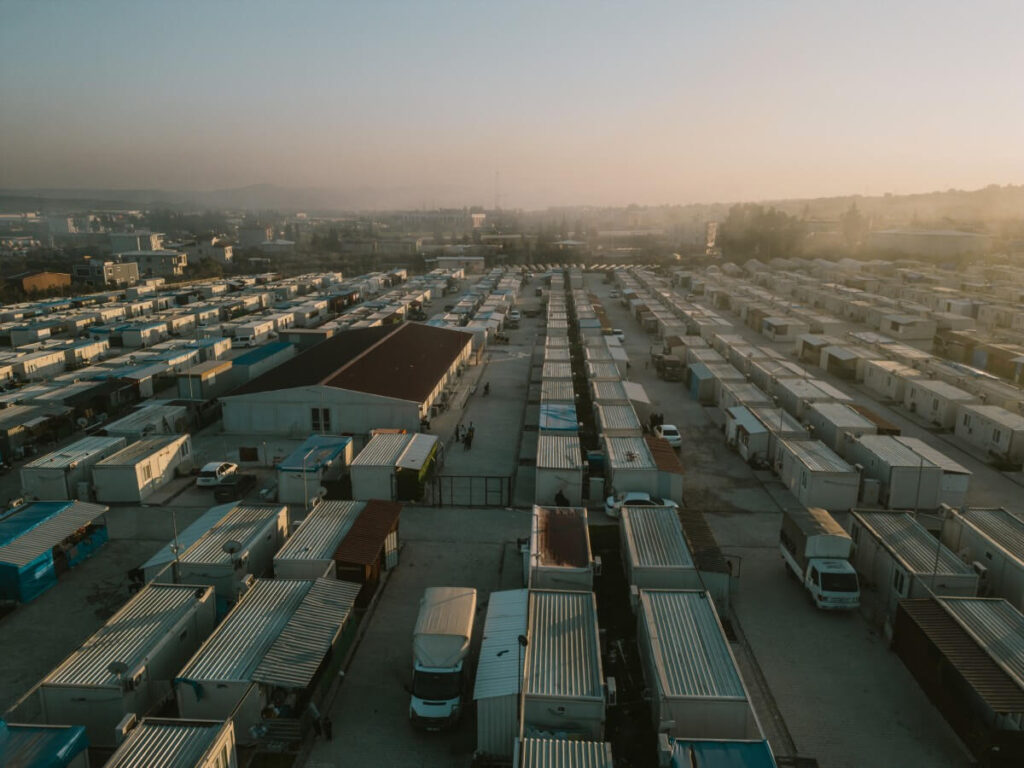
Turkey marked the third anniversary of the February 6, 2023 earthquakes on Friday, with President Recep Tayyip Erdoğan and pro-government media presenting the rebuilding effort as a fulfilled promise, while survivors say squalid living conditions in the region persist.
The magnitude 7.8 and 7.5 earthquakes struck 11 provinces in southern and southeastern Turkey on February 6, 2023, killing 53,537 people, injuring more than 107,000 and leaving millions homeless when thousands of buildings collapsed.
In a video message marking the anniversary, Erdoğan said the state had met its reconstruction pledges and framed the effort as a successful recovery.
Government-aligned coverage has centered on the scale of construction, reporting that more than 455,000 independent units, including homes and workplaces, have been completed in the quake region.
Earlier this week main opposition leader Özgür Özel recalled that the Turkish government had vowed to build 650,000 housing units within a year after the quakes, but said only a small fraction had been completed by the first anniversary and about 30 percent by the end of the second year, claiming that the government had failed to meet its housing pledges for the disaster region.
Still, Erdoğan has described the rebuilding effort as the country’s largest reconstruction mobilization, and officials have repeatedly highlighted mass handovers of new homes across the affected provinces.
Completed housing units do not always mean ready to live in. In parts of the quake region, new housing blocks still lack full infrastructure, delaying handovers and keeping families in temporary sites.
One example is Antakya, the central district of Turkey’s southern Hatay province, one of the hardest hit by the 2023 earthquakes. Out of the 53,537 people killed in the earthquakes, 24,000 people died in Hatay alone.
Thousands of housing units in Antakya were finished but had not been turned over to residents because work on infrastructure was still ongoing, with deliveries expected in the summer.
Large numbers of people remain in container settlements three years on. According to official figures, 360,455 people were still living in container housing as of January 26.
Erdoğan’s message to mark the anniversary of the disaster, which included scenes of rescue efforts, newly built mass housing projects and residents praising the rebuilding effort, sparked criticism for conveniently leaving out families still living in container settlements three years after the quakes.
Accounts from the region reveal continued infrastructure and access problems that shape daily life, especially for vulnerable groups. The number of people with disabilities surged after the earthquakes, and they face barriers in and around container settlements and suffer from the lack of services tailored to disabled residents.
Speaking to Deutsche Welle’s Turkish edition, one Turkish Medical Association official described meeting a disabled survivor in a container city who said he spent his days by the window because his mobility device could not even move around the site.
Accountability remains another fault line between official messaging and public anger. Human rights groups have also used the anniversary to press for accountability.
Amnesty International’s Turkey branch said the scale of the disaster cannot be explained away as a “natural” event, arguing that the death toll reflected failures to meet basic scientific standards for earthquake preparedness along with serious mistakes, neglect and abuse before and after the quakes and weaknesses in coordination and planning. It said everyone responsible, including state officials, should face prosecution and called for rebuilding and housing policies that are safe, transparent and consistent with human dignity.
After three years, some contractors and others have been convicted, but hundreds of cases continue. According to DW, citing official figures, 2,591 criminal cases have been filed, while 116,696 lawsuits were filed against the administration over quake-related destruction, with tens of thousands still pending in administrative courts.
Even where rebuilding is visible, survivors and experts say recovery is not only about house keys. International relief reporting has continued to emphasize livelihood rebuilding and the need for sustained support for people trying to restart small businesses.
Today marks 3 years since 2 massive #earthquakes struck Türkiye, claiming > 53.000 lives. Such a sad day for 🇹🇷 people & all of us who love this great, beautiful country. I visited the area two weeks later. Unforgettable days. My thoughts go to all those affected. pic.twitter.com/Hi1dzODBbO
— Nacho Sánchez Amor (@NachoSAmor) February 6, 2026
The February 6, 2023, earthquakes, centered near Kahramanmaraş, devastated a wide belt of the country’s south and southeast, triggering one of the largest internal displacement crises in modern Turkish history.
More than 39,000 buildings collapsed in the first days after the earthquakes, and some 518,000 housing units were destroyed or heavily damaged in the 11 provinces. The devastation left more than 2 million people in urgent need of shelter and facing long-term displacement.