


Adem Yavuz Arslan*
As the world struggles to process the scale of the newly released Epstein files, another development from Washington has passed with surprisingly little global alarm despite being no less unsettling.
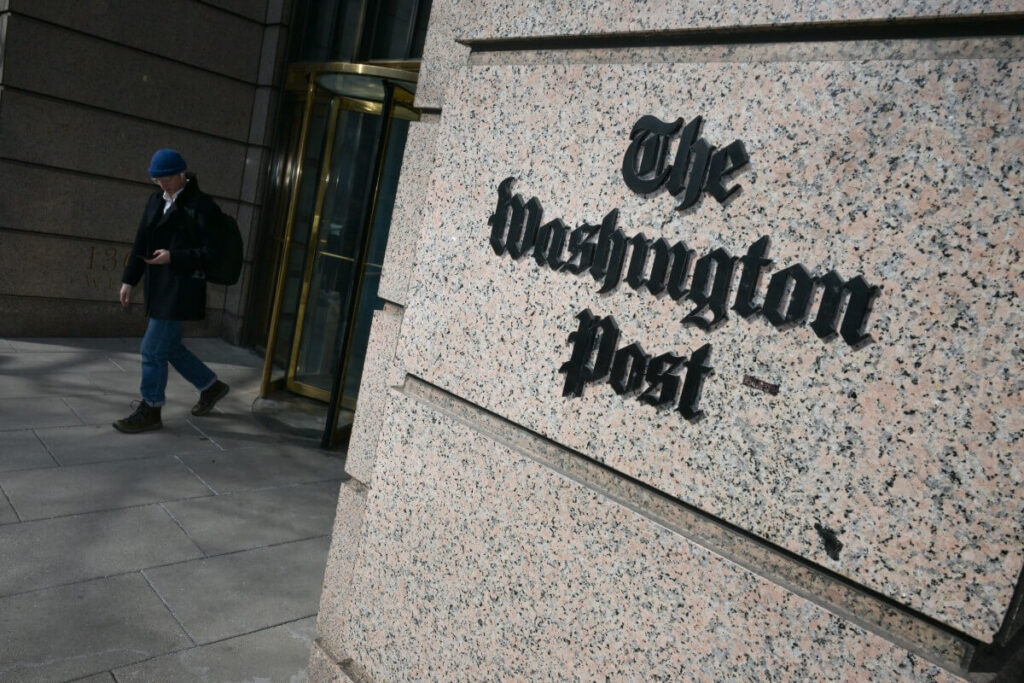
The Washington Post, long regarded as one of the most respected newspapers not only in the United States but worldwide, has eliminated nearly 30 percent of its newsroom. More than 300 journalists have been laid off. Foreign bureaus were shut down. Entire sections, sports among them, were removed from publication.
This is not a routine case of “media downsizing.”
The timing alone makes that clear.
At a moment when the Epstein disclosures have once again revealed the indispensable role of persistent, independent journalism, one of the institutions most closely associated with investigative reporting is retreating from the field.
The irony is difficult to ignore. For years, the paper has carried the slogan “Democracy Dies in Darkness.”
Today, it is not only democracy that appears dimmer but the media meant to protect it.
Not a newspaper, but a system in retreat
The dismissal of more than 300 journalists in a single stroke does not mark the decline of one newsroom; it signals the contraction of an entire media model.
For decades The Washington Post embodied what might be called America’s democratic self-correction mechanism. From Watergate to the Pentagon Papers, it symbolized the distance journalism once maintained from power.
Today, that legacy is being dismantled piece by piece. Foreign bureaus are closing. Photojournalists are being let go. Longstanding supplements — books, culture, sports — are disappearing. What remains is a narrowed editorial corridor focused on national politics, business and technology.
The message is unmistakable: The era of the globally present, field-based, comprehensive newspaper is coming to an end.
Why Washington still matters
Washington is not just another city. Journalism here has never been primarily local; it has revolved around power: government, intelligence agencies, lobbying networks and global political struggles.
The closure of bureaus in places such as Berlin, Kyiv, Cairo and New Delhi does not merely weaken a single outlet. It narrows the field of vision of the American public itself.
Laying off war correspondents while conflicts rage or eliminating photojournalism altogether cannot be explained as cost-cutting alone. It reflects a deeper shift in how news is defined. Being on the ground is expensive. Bearing witness is risky. Desk-based aggregation is cheaper and safer.
That this is happening under the ownership of Jeff Bezos, one of the wealthiest individuals on the planet, further complicating claims that the crisis is purely financial. Yes, the paper reportedly lost around $100 million in 2024. Yes, subscription numbers declined after editorial decisions that alienated parts of its readership. But balance sheets alone do not tell the full story.
The Trump era: not a coincidence
This transformation cannot be separated from the political climate shaped by Donald Trump.
Trump’s sustained assault on the press, branding it “fake news” and “the enemy of the people” was not merely rhetorical. Combined with subscription cancellations, advertising withdrawals and platform-driven pressure, it eroded the economic and psychological foundations of journalism.
Editorial choices during this period intensified scrutiny. The paper’s reluctance to offer explicit political endorsements, shifts in its opinion pages toward a more libertarian tone and its careful balancing act vis-à-vis political power highlighted a longstanding tension: where journalism ends and corporate interest begins.
Is AI the convenient scapegoat?
Management explanations point to falling search traffic, declining subscriptions and shrinking revenue. Yet a more uncomfortable question remains: Do readers no longer want news, or do they no longer want newspapers?
Artificial intelligence has not eliminated journalism; it has disrupted the relationship between journalists and audiences. Millions now consume current affairs through search engines, social platforms and AI-generated summaries rather than through curated front pages.
In this ecosystem, newspapers are no longer the primary narrators of events. They become merely one source among many. And that model cannot sustain hundreds of reporters, especially those working far from metropolitan desks.
The new media order taking shape
The emerging picture is stark: fewer reporters, more commentary. More opinion, less testimony. International reporting becomes a luxury. Regions such as the Middle East, Africa and South Asia slip further from sustained coverage.
Journalism shifts from production to curation. AI-assisted content grows faster, thinner and increasingly detached from lived experience. Independent journalists are not necessarily freer; they are more isolated.
The most dangerous aspect of this collapse is its normalization. When laying off photojournalists, closing book sections or dismissing war correspondents is framed as routine management, what is being trimmed is not excess but collective memory.
Turkey: not shrinking, but being hollowed out
What is happening at The Washington Post is not a distant American story for Turkey.
Turkish journalism is undergoing a far harsher version of the same transformation under conditions of deeper economic fragility, far heavier political pressure and far less institutional independence.
In the United States contraction is driven by market forces and technology. In Turkey newsrooms do not shrink through financial calculations alone; they are emptied by political directives. Journalists are dismissed not because they are costly, but because they are deemed risky. Editorial lines are shaped not by strategy, but by power.
For this reason the Post’s trajectory is not Turkey’s future scenario, it is Turkey’s present reality.
The most dangerous argument: “It’s the same in the West”
Pro-government media in Turkey will inevitably seize on this moment: “Look, newspapers are shrinking in the United States, too. This is a global trend.”
The distinction, however, is fundamental.
In the United States, as newspapers contract, courts still function, alternative media survives and journalists are not imprisoned for their reporting. In Turkey, as media space contracts, public truth contracts with it.
The crisis at The Washington Post raises a difficult question for liberal democracies: Is journalism still economically sustainable?
In Turkey the question is far more severe: Is journalism politically possible at all?
Today it is The Washington Post that retreats. Tomorrow, another newsroom.
And eventually, perhaps, the very idea of the newspaper itself.
*Adem Yavuz Arslan is a journalist with over two decades of experience in political reporting, investigative journalism and international conflict coverage. His work has focused on Turkey’s political landscape, including detailed reporting on the 2016 coup attempt and its aftermath, as well as broader issues related to media freedom and human rights. He has reported from conflict zones such as Bosnia, Kosovo and Iraq, and has conducted in-depth research on high-profile cases, including the assassination of Turkish-Armenian journalist Hrant Dink. Arslan is the author of four books and has received journalism awards for his investigative work. Currently living in exile in Washington, D.C., he continues his journalism through digital media platforms, including his YouTube channel, Turkish Minute, TR724 and X.
Disclaimer: The views expressed in this opinion piece are those of the author and do not necessarily reflect the editorial stance of Turkish Minute.