


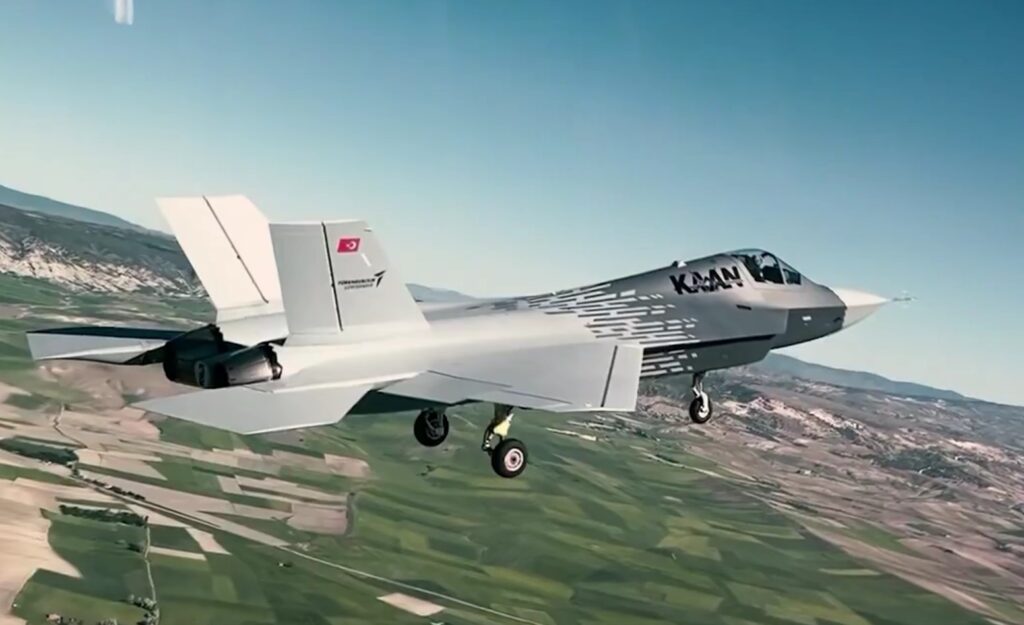
President Recep Tayyip Erdoğan said Turkey and Saudi Arabia are discussing a possible joint investment in KAAN, Turkey’s domestically developed fighter jet, signaling growing defense cooperation between the two countries, the state-run Anadolu news agency reported.
Speaking to journalists on his return flight after visits to Saudi Arabia and Egypt this week, Erdoğan said Ankara has received strong international interest in the KAAN program and that a partnership with Riyadh could be finalized at any time.
“We have received many positive reactions regarding KAAN,” Erdoğan said. “There is the possibility of a joint investment with Saudi Arabia and we could realize this partnership at any moment.”
Erdoğan made the remarks after meeting with Saudi Crown Prince Mohammed bin Salman in Riyadh, where the two sides also signed several agreements covering trade, investment and defense cooperation.
KAAN is Turkey’s flagship fifth-generation fighter jet project, developed by Turkish Aerospace Industries as part of Ankara’s push to reduce dependence on foreign defense suppliers. The aircraft, which was launched in 2016, completed its maiden flight in 2024, and Turkish officials have said serial production is planned for the end of the decade.
Erdoğan said Turkey’s progress in the defense industry is being closely followed by Saudi Arabia and other countries, adding that Ankara prioritizes meeting its own military needs while also seeking to supply allied nations.
“KAAN is not just a combat aircraft,” he said. “It is a symbol of Turkey’s engineering capability and independent defense will.”
Saudi Arabia seeks to upgrade its combat air fleet amid regional tensions. The kingdom has traditionally relied on US-made F-15 fighters for its defense needs and has been seeking to acquire the US-made F-35 fifth generation fighter jets. Despite earlier objections from Washington, US President Donald Trump announced ahead of a White House meeting with Saudi Crown Prince bin Salman last November that the US will sell F-35 fighter jets to Saudi Arabia.
Turkey and Saudi Arabia have expanded defense ties in recent years as relations have improved following a period of tension. Erdoğan said the two countries are determined to deepen cooperation in the defense sector, along with broader economic engagement.
Saudi Arabia has emerged as a key economic partner for Turkey. Erdoğan said bilateral trade reached $8 billion in 2025 and noted that Turkish contractors have undertaken more than 400 projects in the kingdom, with a total value of about $30 billion.
The president also said Saudi companies will invest in renewable energy projects in Turkey as part of an agreement signed during his visit.
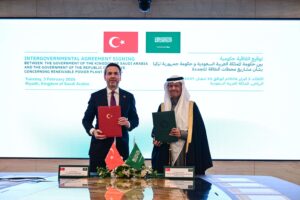
Turkey and Saudi Arabia signed an agreement for a $2 billion renewable energy investment that will see large-scale solar power plants built in central Turkey, according to Energy Minister Alparslan Bayraktar, who made the announcement on Tuesday.

Any Saudi investment in KAAN will mark one of the most significant foreign partnerships for Turkey’s fighter jet project and could boost Ankara’s ambitions to become a major defense exporter.
In the summer of 2023, Turkey and Saudi Arabia signed a deal for the purchase of drones manufactured by Turkey’s leading drone maker Baykar.
Haluk Bayraktar, CEO of Baykar, which is co-run by one of President Recep Tayyip Erdoğan’s sons-in-law, at the time called the deal “the biggest defense and aviation export contract in the history of the Turkish Republic.”
The value of the deal was not made public.