


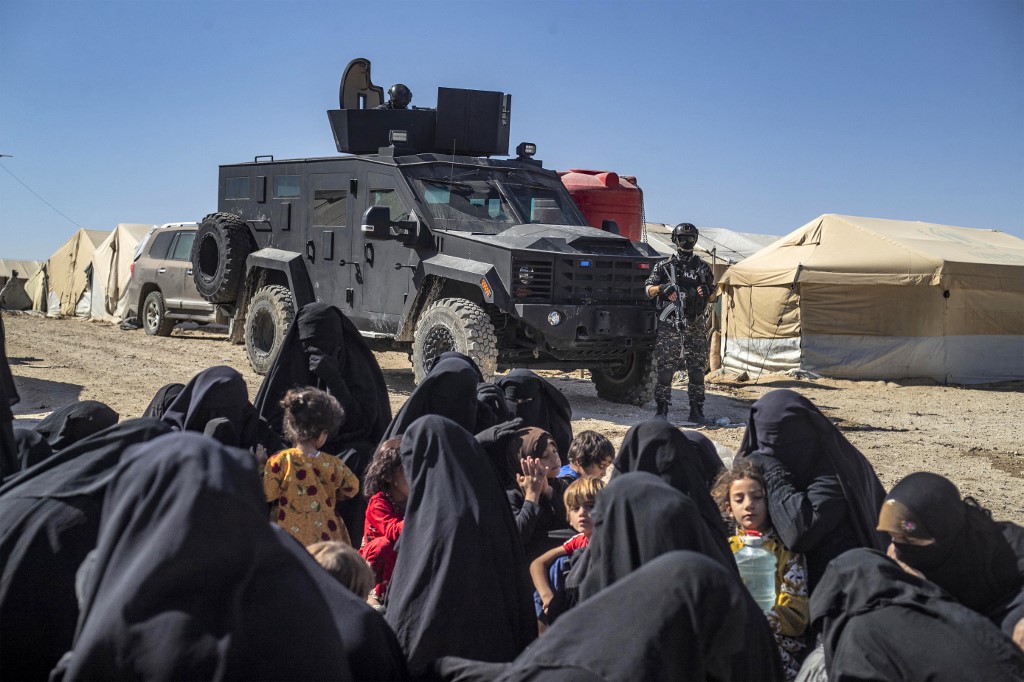
Turkey has decided to repatriate female Turkish citizens and children under the age of 12 held in the Al-Hol and Al-Roj detention camps in northeastern Syria, according to diplomatic sources cited by the Kısa Dalga news website.
The women and children — mostly wives, and in many cases widows, of men affiliated with the Islamic State in Iraq and the Levant (ISIL) group — are expected to undergo a rehabilitation and reintegration process inside the camps before being transferred to Turkey, the report said.
Al-Hol and Al-Roj have for years housed tens of thousands of women and children from more than 70 countries, most of them relatives of ISIL fighters captured during the group’s collapse.
The camps have for years been run by the Kurdish-led Syrian Democratic Forces (SDF), a key partner of the US-led coalition against ISIL.
The repatriation plans come amid major changes in northeastern Syria. Since early January, Syrian government forces and allied fighters have pushed the SDF from large parts of northern Syria as the new administration in Damascus seeks to extend control over autonomous Kurdish-held areas.
Syrian government forces entered and took control of Al-Hol last week after Kurdish-led forces withdrew, while al-Hoj remains under Kurdish administration.
Talks involving Washington, Baghdad and Damascus
Kısa Dalga reported that Ankara has been having discussions since March through a Washington–Baghdad–Damascus channel and has offered guarantees to take custody of Turkish nationals held in northern Syria.
According to United Nations figures from November 2025, around 35,000 women and children remain in the two camps. Turkish citizens are believed to account for roughly 1,300 of them.
A Turkish delegation reportedly visited the camps in August, interviewing detainees, collecting fingerprints and reviewing their recruitment histories.
The report said Turkey is also working to establish the identities of children born in conflict zones, including through DNA testing to confirm family ties before transfer.
Journalist Amberin Zaman said in a post on X this week that at least 50 Turkish families are believed to be in al-Roj, which remains under Kurdish administration. She added that according to the latest UN figures, 1,003 Turkish citizens were in Al-Hol, the larger camp that Syrian government forces took control of last week.
Zaman, who interviewed one of the female Turkish detainees al-Roj for Al-Monitor, quoted the woman as appealing to the Turkish government, though the person asked not to be identified.
Halen Suriye’deki Kürt yönetiminin idaresi altında bulunan DAİŞ savaşçılarının ailelerinin tutulduğu Roj kampında en az 20 Türkiyeli aile bulunuyor. İsmini paylaşmak istemeyen bu genç kişi @AlMonitor aracılığıyla Türk hükümetine seslendi. Geçtiğimiz hafta Şam yönetiminin el… pic.twitter.com/CRIGGzeOdc
— Amberin Zaman (@amberinzaman) January 28, 2026
The young woman, in a video posted by Zaman, called on the Turkish government to ensure their repatriation to Turkey as soon as possible.
Rehabilitation process could last until 2027
Under a framework agreement with actors on the ground, Turkey is expected to deploy psychologists and social services specialists to administer rehabilitation programs in the camps, a process that could continue until mid-2027.
Once in Turkey, children will be put under state protection and provided trauma-focused care under the coordination of the Family and Social Services Ministry and the Health Ministry, the report said. Custody proceedings will begin only after therapy and integration programs are completed.
Male teenagers aged 12 to 18 have been held in separate facilities established by the SDF since 2023 to prevent radicalization, Kısa Dalga reported. Around 600 Turkish boys are believed to be in that category, including some who received ISIL military training.
Authorities are also considering whether their rehabilitation should be completed in Syria before any transfer to Turkey.
Border trial option under discussion
The report said Turkish security and judicial officials are also considering whether prosecutions could be carried out at border courts on security grounds, reviving a model similar to the controversial “Habur border court” practice used in 2009.
That model was introduced during Turkey’s so-called Kurdish opening, when members of the outlawed Kurdistan Workers’ Party (PKK) crossed into Turkey from Iraq through the Habur border gate and were questioned by specially convened courts at the border. The process sparked widespread backlash and political controversy, and the practice was later abandoned.
Turkey has repeatedly called for the camps and prisons holding suspected ISIL members and their relatives in northeastern Syria to be transferred to the control of Syria’s transitional government from the SDF, which it sees as linked to the PKK, following the ouster of President Bashar al-Assad in December 2024.
Ankara said it was ready to provide support in managing the facilities.
The ISIL camps in Syria are described as open-air detention centers whose populations skyrocketed after the defeat of ISIL in 2019. Human rights organizations have long been criticizing the inhumane conditions in the overcrowded camps.
Many countries, particularly in the West, are refusing to take back their citizens from these camps out of security concerns due to their alleged ISIL links.