


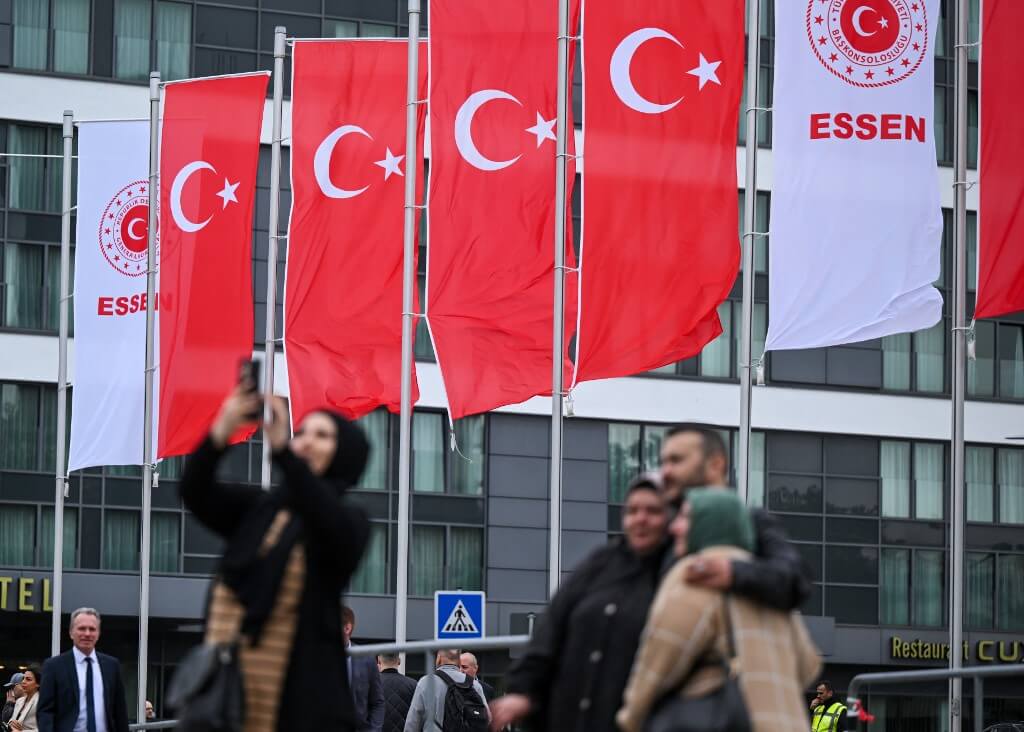
People from Turkey made up the largest group of family members who moved to Germany through family reunification in 2025, according to official figures released by the German Foreign Ministry.
By the end of November German authorities had issued 101,756 family reunification visas, the German Welt am Sonntag newspaper reported, citing the Foreign Ministry.
Nearly 15,000 of those visas were granted to people arriving from Turkey, followed by some 13,100 from Syria. India, Kosovo and Albania were also among the leading countries of origin.
Since a failed coup in Turkey in 2016 that led to a widespread crackdown on dissent by the Turkish government and a collapse of judicial independence, the number of Turkish nationals seeking asylum in Germany and other Western European countries has seen a marked increase.
Turkish migration to Germany, which hosts the world’s largest Turkish diaspora, numbering around 3 million people, has reached new highs in the past years. Between 2022 and 2024, 112,000 Turkish citizens moved to Germany, making Turkey the third-largest country of origin for migrants during that period. Ukraine ranked first with 843,000 arrivals, followed by Syria with 124,000, according to figures released by Germany’s Federal Statistical Office in May.
An ongoing economic crisis in Turkey caused by high inflation and the constant depreciation of the Turkish lira as well as growing inequalities among the population is also prompting some Turks, particularly the young, to seek ways to leave the country for a better life in Europe.
Moreover, yet another victory by President Recep Tayyip Erdoğan, whose party has been ruling Turkey since 2002, in the presidential election of 2023 led to disappointment among his opponents, prompting many of them to reconsider living in the country.
Germany’s family reunification rules generally apply to spouses and minor children and, in some cases, parents. In most cases, arriving family members join people living in Germany who do not have German citizenship.
According to the report about 44,400 spouses had been granted visas by the end of November 2025. Around 37,200 children joined their parents, while roughly 3,500 parents were allowed to reunite with their children. An additional 16,300 visas were issued to spouses of German citizens.
The overall number of family reunification visas has declined in recent years, from about 130,000 in 2023 to around 124,000 in 2024.
In July the German government suspended family reunification for people with subsidiary protection status for two years, a move that mainly affects refugees from Syria.
Under the new rules family reunification for this group is permitted only in exceptional hardship cases, allowing spouses, minor children and, in the case of unaccompanied minors, parents to join them.
Before the suspension, up to 1,000 family members of people with subsidiary protection status were allowed to enter Germany each month.