


Turkey’s Defense Ministry has rejected claims that the country’s air defense systems are vulnerable after an unidentified drone was shot down near Ankara earlier this week, saying the incident was handled successfully and that both Russia and Ukraine have been warned against actions that could threaten security in the Black Sea.
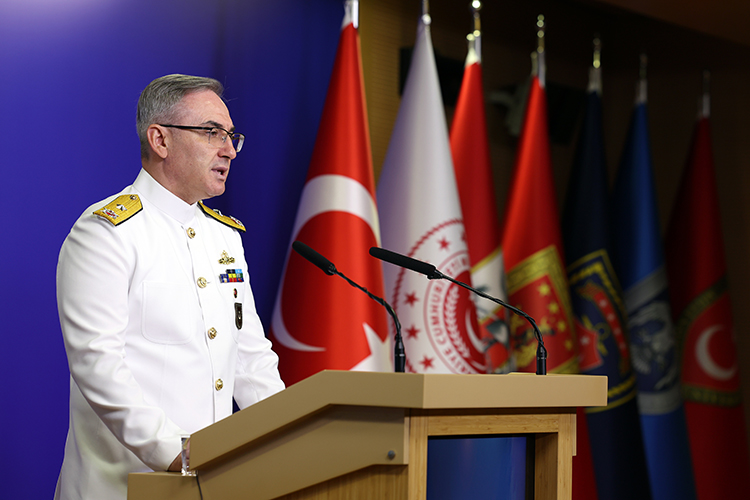
Speaking at a weekly press briefing on Thursday, Rear Adm. Zeki Aktürk, the ministry’s press and public relations adviser, said allegations suggesting shortcomings in Turkey’s air defense capabilities “do not reflect the truth.”
“The process related to the UAV in question was successfully managed and concluded,” Aktürk said. “Claims that our air defense system is in a state of vulnerability are unfounded.”
The drone was downed on December 15 between Ankara’s Elmadağ district and the neighboring province of Çankırı. The Defense Ministry said the device had “gotten out of control” after approaching Turkish airspace from the Black Sea and was destroyed “in a safe area outside a populated zone.”
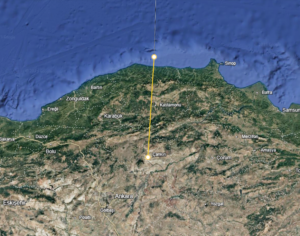
The remarks came amid growing public and political debate over how the drone was able to penetrate deep into Turkish airspace before being intercepted by F-16 fighter jets.
According to Aktürk, the UAV was detected as it approached Turkish airspace from the Black Sea, prompting the immediate activation of identification and tracking procedures in line with operational protocols.
He said the drone’s low altitude, speed and small size made detection difficult, requiring cross-verification of data from multiple systems, including radar, electro-optical sensors, electronic warfare units and early warning assets.
After assessments showed the UAV was out of control, Turkish fighter jets tracked and downed it through a controlled intervention in a location chosen to minimize risks to civilians and civil aviation, Aktürk said.
The interception of the drone led to disruptions of flight operations at Ankara’s Esenboğa Airport on Monday, with some flights diverted as a precaution following a warning from the Defense Ministry.
Aktürk added that the drone broke into small fragments upon impact, complicating efforts to recover intact wreckage and determine its origin.
The ministry has not disclosed who operated the drone or how it managed to penetrate so deeply into Turkish airspace before being intercepted.
Efforts to conduct a search and technical examination are continuing, he said, urging the public to disregard speculation and disinformation before verification processes are completed.
Aktürk said that Turkey’s airspace is monitored round the clock through a layered and integrated defense architecture designed to detect, identify, track and neutralize aerial threats.
“Detection, identification and reaction processes are regularly reviewed based on lessons learned, and operational procedures and technical capabilities are continuously improved,” he said, adding that Ankara had also taken diplomatic steps following the incident.
“Due to the ongoing war between Ukraine and Russia, both sides have been warned to exercise greater caution regarding actions that could negatively affect security in the Black Sea,” he said.
The incident comes amid heightened tensions in the Black Sea linked to Russia’s war in Ukraine, with Ankara repeatedly warning against spillover risks. Turkey, a NATO member, has sought to maintain ties with both Kyiv and Moscow while avoiding direct involvement in the conflict.
The drone incident has heightened scrutiny over Turkey’s air defense security, particularly as opposition lawmakers and security analysts question why the UAV was not intercepted earlier.
The main opposition Republican People’s Party (CHP) has submitted a parliamentary inquiry seeking details on the drone’s flight path, detection timeline and whether all interception capabilities were employed promptly.
Debates over Turkey’s air defense readiness have also intersected with renewed discussions about its Russian-made S-400 system and the domestically developed “Steel Dome” project, an integrated, multi-layered air defense system designed to counter threats ranging from drones to ballistic missiles.