


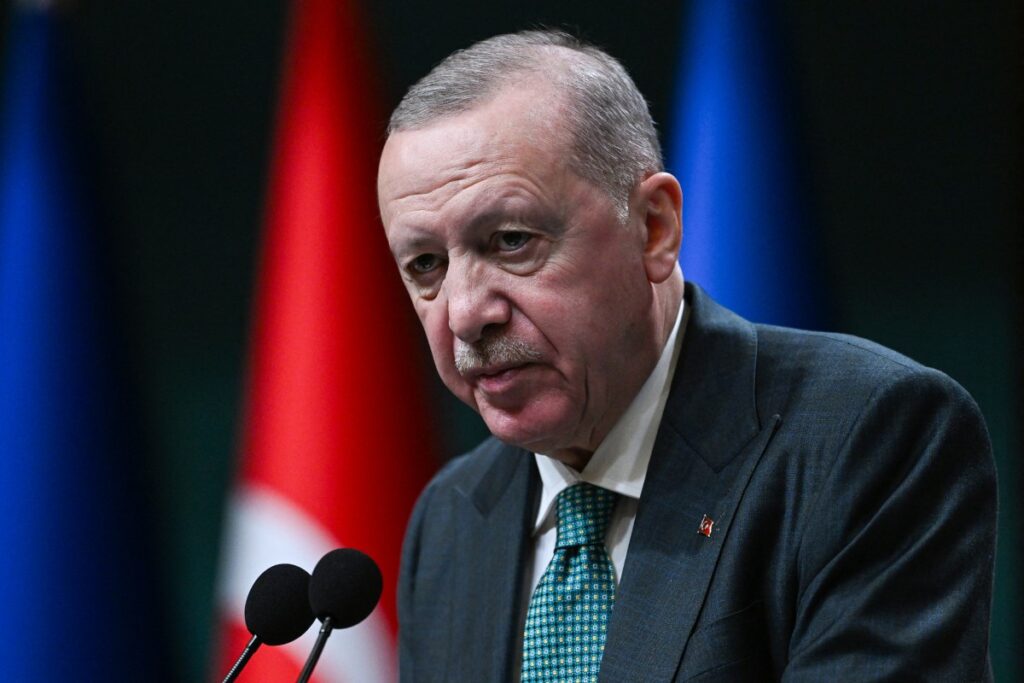
Turkish President Recep Tayyip Erdoğan on Monday denounced drone attacks claimed by Ukraine on oil tankers heading for Russia near Turkey’s Black Sea coast, calling them a worrying escalation that brings the war into Turkish waters.
“We cannot under any circumstances accept these attacks, which threaten the safety of navigation, the environment and lives in our exclusive economic zone,” Erdoğan said after a cabinet meeting in Ankara, referring to an area of the Black Sea where Turkey has special rights over natural resources under international law.
The comments followed Ukrainian naval drone strikes late Friday on two Russia-linked tankers, the Kairos and the Virat, as they sailed toward the Russian port of Novorossiysk to load oil for export.
The vessels, described in open-source sanctions databases as part of Russia’s “shadow fleet” used to bypass Western oil restrictions, were hit in quick succession off Turkey’s northern coast, sparking fires but causing no reported casualties.
On Saturday Turkish Foreign Ministry spokesman Öncü Keçeli said the attacks took place inside Turkey’s exclusive economic zone and “posed serious risks to navigation, life, property and environmental safety in the region.” He added that Ankara had started talks with “relevant parties” to prevent the spread of the conflict across the Black Sea and to protect Turkey’s economic interests.
Ukraine’s security services say they used domestically produced Sea Baby naval drones in the operation, framing the tankers as legitimate targets linked to Russia’s oil revenues, which help fund the full-scale invasion launched in 2022.
Kyiv has urged Western governments to act against the “shadow fleet” and has shifted from striking refineries on Russian territory to hitting ships at sea in an effort to restrict Moscow’s export capacity.
The Black Sea has become a key theatre of the war, even though Turkey, a NATO member, controls access through the Bosporus and Dardanelles under the 1936 Montreux Convention.
Ankara closed the straits to most warships shortly after Russia’s invasion and later brokered, then watched the collapse of, a deal that allowed Ukraine to export grain by sea. It has tried to keep working relations with both Kyiv and Moscow, selling drones to Ukraine while importing Russian gas and coordinating on energy and tourism.
The latest strikes also come after a separate Ukrainian drone attack damaged infrastructure at the Caspian Pipeline Consortium terminal in Novorossiysk, a major outlet for Kazakh and Russian oil.
Kazakhstan and Turkey have both voiced concern that Ukraine’s campaign against Russian energy infrastructure and shipping could hurt their own economic and security interests in the Black Sea region.
Erdoğan said Turkey would continue to warn all sides that attacks on commercial shipping in its exclusive economic zone are unacceptable and risk a wider escalation of the conflict at sea.
With reporting by Agence France-Presse