


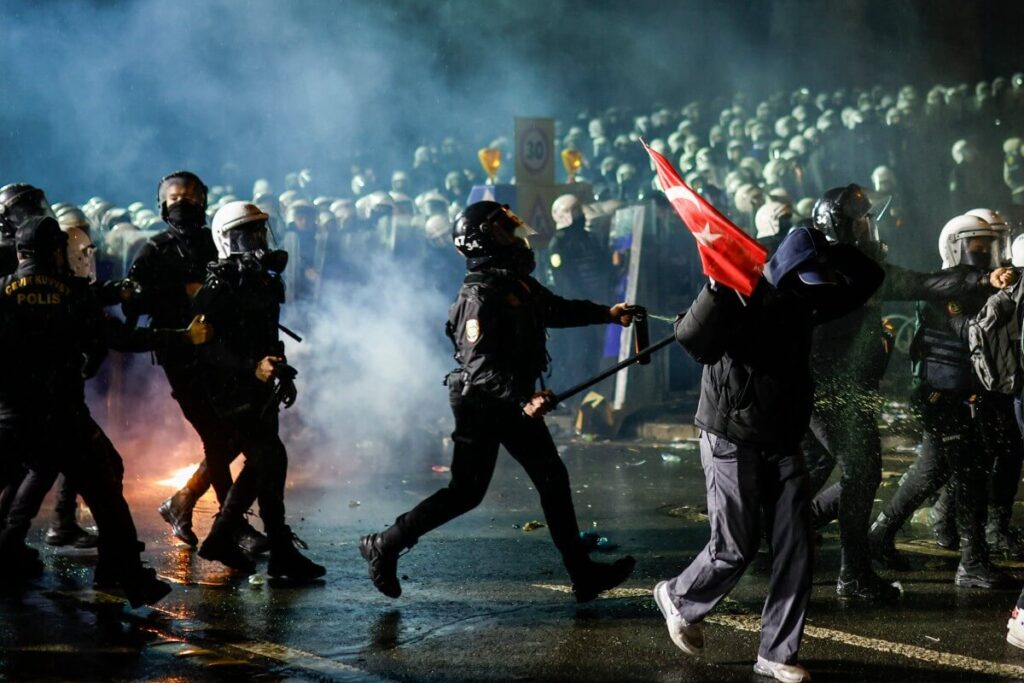
A Turkish court on Thursday acquitted four journalists who were on trial over mass demonstrations in İstanbul in March, a case that drew condemnation from press freedom watchdogs.
The four, all photographers, including Agence France-Presse photographer Yasin Akgül, were arrested in dawn raids several days into a huge wave of protests sparked by the arrest of İstanbul’s powerful opposition Mayor Ekrem İmamoğlu, a top opponent of President Recep Tayyip Erdoğan.
They — like thousands of protesters — were accused of violating the law on demonstrations and public gatherings.
“There is no solid basis that the defendants committed the alleged offense,” the judge said, ruling to acquit.
Akgül is the only one employed by an international media outlet; the other three are Ali Onur Tosun of Turkish broadcaster NOW Haber and freelancers Bülent Kılıç and Zeynep Kuray.

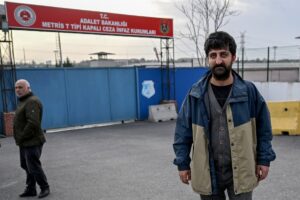
(Photo by Ozan KOSE / AFP)
None of them were present in court in İstanbul.
AFP’s management had repeatedly called for Akgül’s acquittal, with his lawyer Kemal Kumkumoğlu telling the court at the last hearing on October 24 that there had been no criminal wrongdoing.
Media rights group Reporters Without Borders (RSF) welcomed the decision in a case it has described as “unlawful.”
“The acquittal of the journalists was a relief, but it also showed their arrests were arbitrary,” RSF’s Erol Önderoğlu told AFP, saying it was aimed at “obstructing the public’s right to access news.”
The protests, which spread from İstanbul across the country, were the biggest since massive anti-government demonstrations that began at İstanbul’s Gezi Park in 2013 and swept the country.
İmamoğlu, who remains in jail, was arrested as part of a corruption probe.
But his jailing was widely seen as a political move, with the mayor considered the only politician with a chance of beating Erdoğan at the ballot box.
‘Pressure on press freedom’
AFP’s Akgül said the decision was expected even though it came late.
“Now that the psychological strain of the trial and my difficulty in focusing are gone, I will continue on my path with even more reporting,” he told AFP after the verdict.
“The right decision has been made. I hope that other journalists who are still inside will also be freed as soon as possible,” he said.
Akgül’s lawyer Kumkumoğlu said he was waiting for documents to see the judge’s reasoning in order to understand the final decision.
“We need to wait for the decision with the reasoning and then the objection period. Only then we can have a final decision,” he said.
In Turkey, journalists and publishing executives are regularly targeted by arrests, with TV stations and other outlets hit with temporary suspensions, heavy fines or both.
Kumkumoğlu said the arrests had set a worrying precedent: that “whenever journalists go to cover any demonstration, they may be treated as protesters, detained or taken from their homes.”
“Whatever they do, it also means that the authorities may choose not to recognize them as journalists,” he said.
“This situation creates a serious risk and puts pressure on press freedom and the right to receive information.”
On Wednesday a Turkish court sentenced popular political journalist and commentator Fatih Altayli to four years in prison for “threatening” Erdoğan.
RSF places Turkey 159th out of 180 countries in its world press freedom rankings.
© Agence France-Presse