


Turkish President Recep Tayyip Erdoğan has denied claims that Turkey plans to hand over control of its rare earth reserves in the central province of Eskişehir to a foreign country, insisting that the Beylikova site will remain under Turkish control, the state-run Anadolu news agency reported.
His comments came after opposition lawmakers recently accused the government of delaying the development of the mine to allow US companies access under favorable terms.
Speaking after a cabinet meeting on Wednesday, Erdoğan dismissed the opposition’s accusations as false and politically motivated.
“The Beylikova rare earth field will never be given to any country,” he said. “Anyone making such claims is slandering their own country.”
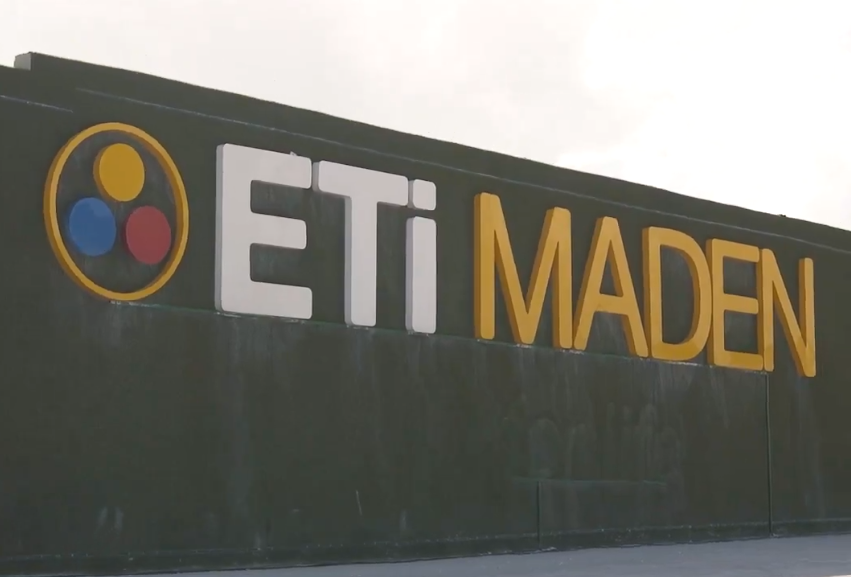
The Beylikova deposit was discovered in 2022, and a mining facility was opened by the state-run Eti Maden company in 2023.
Erdoğan said Turkey’s goal is to develop the deposit as part of a broader strategy to increase self-sufficiency in energy and technology.
The Beylikova deposit is considered the world’s second-largest rare earth field and contains critical minerals such as cerium, praseodymium and neodymium, essential for electric vehicles, wind turbines, defense systems and electronics. It also has scandium, europium and yttrium, used in aerospace and screen technologies.
Ankara and Washington are weighing joint development and refining projects following last month’s White House meeting between US President Donald Trump and Erdoğan.
Ankara has also been in talks with Canada and Switzerland about potential partnerships following the collapse of earlier negotiations with China and Russia over technology transfer and refining rights, according to a recent report in Bloomberg. Turkey is seeking JORC Code certification, an international mining standard meant to attract investment.
At the Beylikova site, Erdoğan said, drilling has been conducted in 310 locations, covering about 125,000 meters, revealing 694 million tons of resources, mainly barite and fluorite.
“We want to become one of the world’s top five producers of rare earth elements,” he said, adding that Eti Maden has launched a pilot facility capable of processing 1,200 tons of ore annually.
Erdoğan said another key goal of Turkey’s energy policy is to market its mineral resources abroad in ways that add greater economic value.
Deniz Yavuzyılmaz, deputy chairman of the main opposition Republican People’s Party (CHP), brought up the claims last week, saying a 2023 audit of Eti Maden showed no processing plants had been established more than a decade after Turkish geologists discovered the reserves.
“These priceless minerals are being held back so they can be given away to the United States,” Yavuzyılmaz wrote on X.
CHP leader Özgür Özel also warned against what he called the “surrender of Turkey’s mineral wealth,” urging citizens to resist any deal that undermines national control.
Ankara’s engagement with Western partners comes as the United States and European Union intensify efforts to reduce China’s dominance in rare earths. China currently accounts for about 70 percent of global mining and over 90 percent of refining capacity for the 17 critical elements, which are vital for defense, advanced medical technology and consumer electronics.
Turkish officials have said any deal must include provisions for technology transfer and local manufacturing, in line with Ankara’s broader approach in agreements with major US defense contractors such as Boeing and Lockheed Martin.
Turkey signed a memorandum of understanding with China in October 2024, but talks collapsed over technology transfer disputes. This year Ankara shifted focus to the US and other Western partners.