


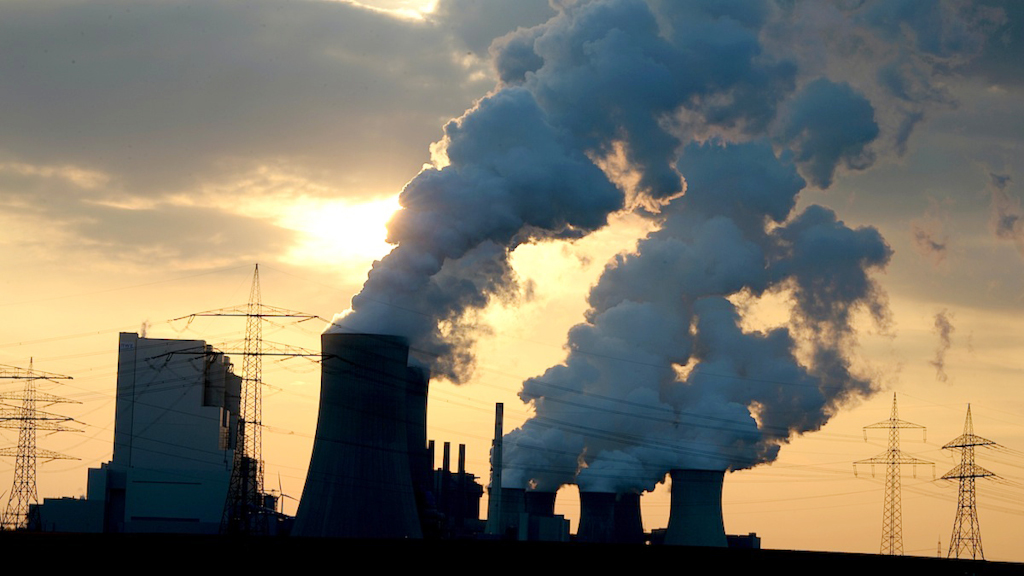
Greenpeace Turkey has urged the government to overhaul the tax system to address both climate change and social inequality, calling for the end of subsidies to polluting industries and the adoption of a “polluter pays” principle, Deutsche Welle Turkish service reported on Thursday.
In its new report, Tax and Climate Justice in Turkey, the group claims that tax incentives benefiting fossil fuel and other environmentally damaging sectors should be scrapped, with the resources redirected to climate adaptation and social protection.
Turkey is ranked as highly vulnerable in 9 out of 10 climate-fragility dimensions; in 2023 alone, authorities logged 5,233 disasters, 40 percent of which were floods and 32 percent wildfires.
The report also warns of escalating risks, noting that extreme weather, droughts and rising sea levels already threaten lives and livelihoods. The report projects that heatwave duration could rise by 284 percent at +1.5 degrees Celsius, 774 percent at +2 degrees Celsius and 4,242 percent at +4 degrees Celsius relative to the 1985–2014 period.
A public opinion survey included in the report reveals widespread dissatisfaction with the current system. Seventy-two percent of respondents said Turkey’s tax regime is unfair, and 80 percent supported higher taxation of the wealthy and corporations to curb the impacts of climate change. The top 10 percent in Turkey emit an average of 22.6 metric tons of carbon dioxide equivalent (tCO₂e) per person annually, versus 3.1 tCO₂e for the bottom 50 percent, a disparity that strengthens the case for a polluter-pays approach.
Greenpeace campaigner Berk Butan told DW that the current model shifts the burden onto ordinary citizens while subsidizing polluters. He pointed to fossil fuel subsidies amounting to 63.8 billion lira ($1.5 billion) in 2023, noting that the money could instead have funded hundreds of firefighting planes.
As of 2024, 65 percent of Turkey’s tax take comes from indirect taxes, nearly double the EU average of 34 percent, which shifts the relative burden onto low and middle-income households. This structure, the report argues, entrenches inequality and limits funding for adaptation measures that would protect the most vulnerable.
The report calls for fair and transparent allocation of adaptation finance, a polluter-pays reform of tax and budget policy and the adoption of green budgeting to track and prioritize climate spending.
The campaign, launched under the slogan “Kirletene Ödet, Yükümü Hafiflet” (Make Polluters Pay, Lighten My Burden) is also collecting public signatures to pressure the government to act.
The call comes after parliament in July passed a long-awaited climate law that critics said favors market mechanisms over real environmental action. The law establishes an Emissions Trading System (ETS) and sets out the institutional framework for cutting greenhouse gases, but opposition lawmakers and NGOs condemned it as prioritizing corporate interests.
“This so-called ‘climate law’ is being introduced solely for the benefit of five pro-government companies,” said main opposition Republican People’s Party (CHP) lawmaker Ali Mahir Başarır at the time. “There is no solution in this law for the regions where low-income citizens, who are most affected by climate change, live.”
Environmental groups echoed the criticism. The TEMA Foundation said the legislation fails to phase out fossil fuels or provide for a just transition, describing it as a regulation for carbon markets where “the losers are people and nature.”