


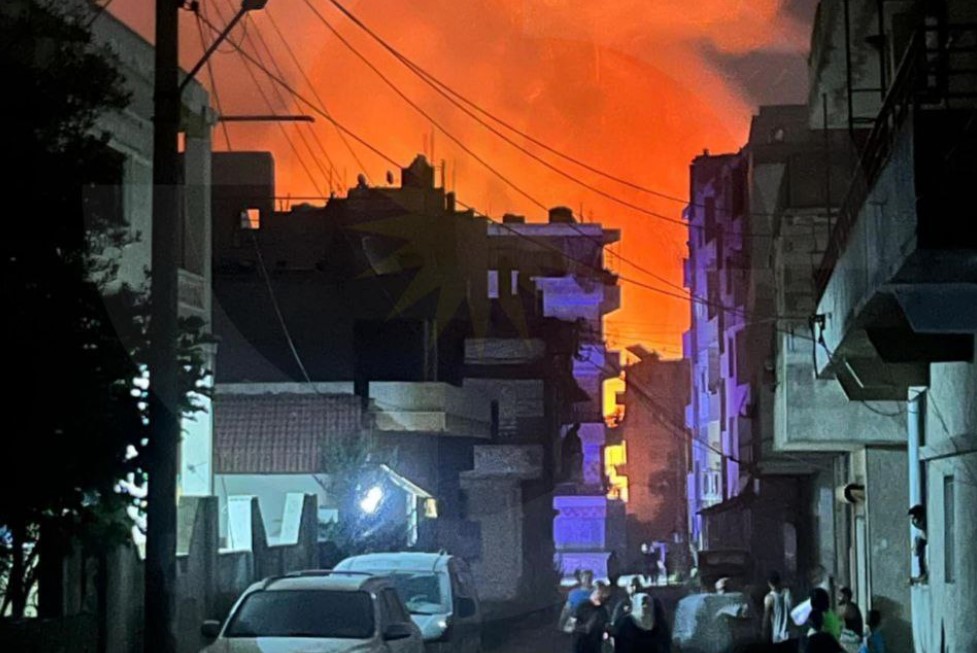
An Israeli security source told Saudi broadcaster Al-Hadath on Tuesday that a strike on Monday night on the Syrian city of Homs targeted depots holding Turkish-made missiles and air defense equipment.
The source accused Turkey of “provoking” Israel and said Israel is talking to Syria’s new leadership about security arrangements while reserving the right to use force.
#Syria: Israeli security source says the airstrikes carried out yesterday destroyed Turkish-made military equipment, including missiles.
Same source claims Ankara is trying to "provoke" Israel and drag both countries into confrontation. https://t.co/G5fdrvrhaF
— Qalaat Al Mudiq (@QalaatAlMudiq) September 9, 2025
Syrian state media and regional outlets said the same overnight wave also hit military sites around Latakia on the Mediterranean and possibly near Palmyra in central Syria.
The Homs strike reportedly included the Syrian Air Defense College area, while a barracks was struck near Saqoubin, just north of Latakia.
Video and wire reports described explosions and smoke near Homs and Latakia as Damascus condemned an escalation that it called a violation of Syrian sovereignty.
Israel has conducted hundreds of strikes in Syria for years to prevent the latter’s military forces from building up advanced weapons that could threaten Israel’s north.
Those targets historically included Iranian-linked sites and Syrian air bases, but since the fall of Bashar al-Assad in December 2024, Israel has expanded its campaign against any post-war military buildup it sees as dangerous.
Turkey is a NATO member that backs Syria’s new authorities and has moved quickly to shape security on its southern border after Assad’s ouster.
Israel views new runways, depots, radars and missile stocks inside Syria as red lines regardless of who supplies them.
In the spring Israel struck multiple Syrian air facilities including the Hama military airport and the T-4 base near Homs, saying it was eliminating “remaining military capabilities” at those sites.
Regional and Israeli press also reported that Turkish military teams had recently inspected Syrian airfields such as T-4 and Palmyra, which helped trigger earlier Israeli pre-emptive raids.
Ankara and Tel Aviv have been trying to avoid a direct clash even as rhetoric has hardened over Israel’s military campaign in Gaza and over Syria.
The two sides opened technical talks this year to set up a deconfliction channel focused on Syria to prevent incidents between their forces.
Azerbaijan, which has close ties to both Turkey and Israel, has hosted talks as a mediator.
Despite the channel, Israel has kept up strikes whenever it judges that new missiles, drones or air-defense systems are being positioned in Syria in ways that could limit Israeli freedom of action.
Turkey, meanwhile, has increased political and economic pressure on Israel over Gaza, including curbs on flights and trade.
That combination means the Syrian theater is now where the Turkey–Israel rivalry most risks turning kinetic, even if neither capital says it wants a fight.
Turkey sees a chance after Assad to stabilize Syria, push refugee returns and secure its frontier with a friendly Damascus.
The bottom line seems to be that any confirmed Turkish air-defense or missile deployments inside Syria will likely draw more Israeli pre-emptive strikes, raising the risk of a direct Ankara–Tel Aviv crisis.
Both governments are still talking through mediators, but the skies over Syria are crowded and the margins for error are thin.