


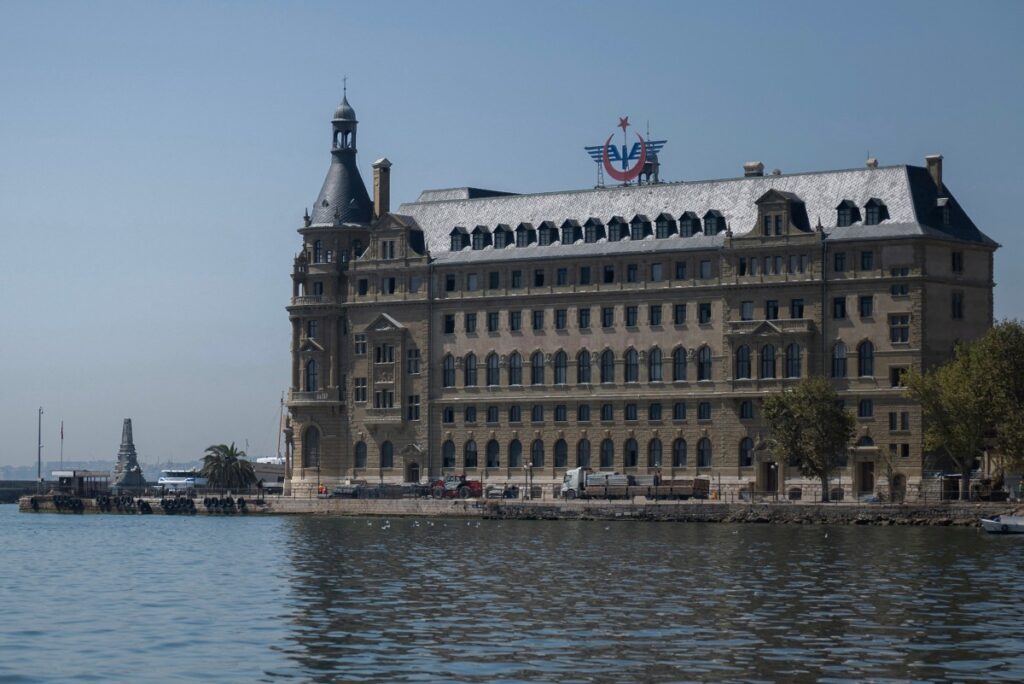
When Şenay Kartal worked at İstanbul’s Haydarpaşa station, her days were filled with the rumble of trains and the bustle of passengers.
But gone are the times when travelers from Anatolia walked its marble halls, making the landmark on the Asian side of the Bosporus Turkey’s busiest station and the eastern hub of the Berlin-to-Baghdad railway.
The station, once immortalized in Turkish films and novels, has been taken over by the Ministry of Culture and Tourism, which plans to turn it into an art center.
For Kartal, a 61-year-old retiree who spent 38 years there, the building should remain a railway station. “It was such a beautiful place, full of movement and energy. That beauty no longer exists today,” she told Agence France-Presse.
A station steeped in history
Opened in 1908 at the end of the Ottoman Empire, Haydarpaşa witnessed the collapse of empire, World War I, the Armenian deportations, military coups, earthquakes and a major fire.
“It holds a special place in the memories of people who experienced migration from rural Turkey to İstanbul. We see reflections of this in literature, art and cinema,” said researcher Ayça Yüksel.
Yet the station has lacked trains since 2013, closed first for restoration and then for archaeological excavations that uncovered artifacts dating back to the fifth century BC.
Resistance to redevelopment
Last year the culture ministry took control, with the first phase of the arts center set for completion in 2026. Railway staff living in parts of the complex have been told to leave.
“This isn’t just a building, it’s everything to us,” said train driver Hasan Bektaş, a member of the Haydarpaşa Platform, which includes academics, urban planners and railway staff. He accused the government of exploiting the station’s prime location for profit.
In October 2024 Culture and Tourism Minister Nuri Ersoy promised it would continue to function as a station, with cultural spaces and a public garden but “never a shopping mall or hotel.”
Icon under threat
In the early 2000s, proposals for skyscrapers, a World Trade Center and even a Venice-style makeover circulated, but none came to pass.
“Haydarpaşa is a world-renowned icon, but no one fought to preserve it exactly as it was,” Bektaş said.
Every Sunday, protesters gather outside, chanting, “Haydarpaşa is a train station and must stay that way.”
For 22-year-old student Nehir Güner, the project is symbolic of misplaced priorities. “Railways are so important for a city. It’s painfully clear the art center project is all for show.”
Architect Gül Köksal added, “It’s like a jewel — but it has meaning only if it’s preserved and kept alive with everything that makes it.”