


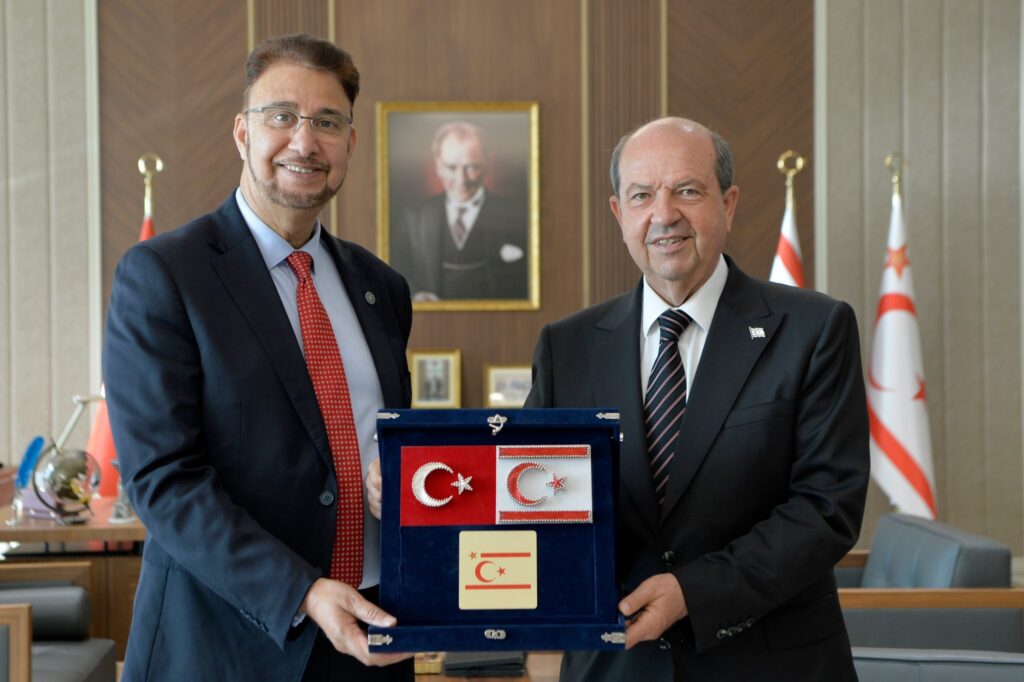
Afzal Khan, a British Labour lawmaker serving as the United Kingdom’s trade envoy to Turkey, resigned after a private visit to the self-declared Turkish Cypriot state in the north of Cyprus sparked condemnation from the Cypriot government and criticism in London.
Khan, who represents Manchester Rusholme in parliament, traveled to the north of the island on August 8, where he met with Turkish Cypriot leader Ersin Tatar and received an honorary degree. He said the trip was personal and self-funded, but his role as trade envoy made the visit politically sensitive.
Cyprus has been divided since 1974, when Turkey intervened following a coup in Nicosia backed by the military junta then ruling Greece. In 1983 Turkish Cypriot authorities declared independence as the Turkish Republic of Northern Cyprus (KKTC), which is recognized only by Turkey. The international community, including the UK, regards the Republic of Cyprus as the island’s sole legitimate government.
Because of this, visits by foreign officials to the Turkish Cypriot administration are seen as conferring legitimacy on an entity the UK does not recognize. Britain, which is one of Cyprus’s guarantor powers under international treaties, has consistently maintained its support for the Republic of Cyprus and avoids official contacts with Turkish Cypriot authorities.
Khan’s visit drew immediate criticism from the Cypriot government, which called it “illegal and provocative.” The timing, just weeks after the anniversary of the 1974 intervention, added to the outcry. Greek Cypriot community groups in Britain also denounced the trip, saying it undermined long-standing UK policy.
In London opposition figures pressured the government of Prime Minister Keir Starmer to act. Critics said Khan’s actions were incompatible with his role of envoy and risked damaging the UK’s diplomatic standing.
Khan defended himself, saying he went for family reasons and to attend a university ceremony but acknowledged the controversy had made his position untenable. “I do not want this matter to become a distraction from the important work of building stronger trade relations,” he said in his letter of resignation.
Cyprus welcomed the resignation. Its foreign ministry said the episode showed that there was “no room for tolerance” for attempts to lend credibility to the breakaway administration in the north.
Turkish Cypriot leader Tatar reacted strongly to the backlash. He said he had invited Khan to visit and described welcoming him in Cyprus as an honor. Tatar condemned the criticism from the Republic of Cyprus and other groups as “intolerant” and part of what he called a long-standing policy of isolating Turkish Cypriots from international life. He argued that the attacks on Khan were “not only directed at our guest but also an unacceptable insult to the honor and will of the Turkish Cypriot people.”
Tatar said the response showed why expecting equality from the Greek Cypriot leadership was unrealistic and reiterated his position that the Turkish Cypriot community deserved recognition on the basis of “two states on the island, sovereign equality and equal international status.”
The dispute comes amid the continuing sensitivity around the island’s unresolved division. Decades of United Nations-mediated peace talks have failed to produce a settlement, leaving Cyprus split between the internationally recognized Republic of Cyprus in the south and the Turkish Cypriot authorities in the north.