

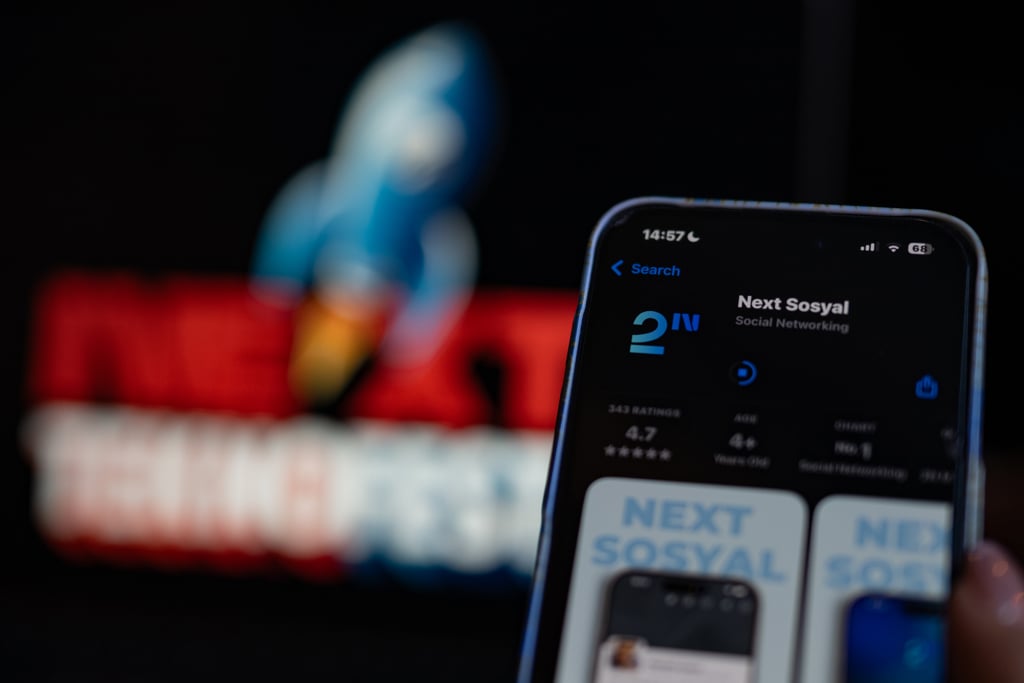

A new Turkish social media platform introduced as a “domestic and national” innovation is facing scrutiny after reports revealed it was built on Mastodon, an open-source software developed in Germany, according to Turkish media reports.
Next Teknofest Social, or “Next Sosyal,” was promoted earlier this month by Selçuk Bayraktar, chairman and chief technology officer of drone manufacturer Baykar and the son-in-law of President Recep Tayyip Erdoğan. Bayraktar introduced the platform on X earlier this month, describing it as a secure, ad-free alternative to global networks.
However, following the promotional post, the official Mastodon account publicly replied, “hello, please contact us via direct message.” Representatives for Mastodon later told independent news outlet T24 that they had been attempting to contact Bayraktar via email since July 8, with no response. The public message, they said, was a last resort to ensure transparency.
Mastodon founder Eugen Rochko also said on Wednesday that Next Sosyal is using Mastodon’s open-source code without complying with its licensing terms.
“Thank you to all who reached out; our team is aware that the new Turkish social media platform Next Sosyal is using Mastodon code without following the terms of the license and we have already reached out to them,” he tweeted.
Next Sosyal was launched on July 4 by Baykar in collaboration with the Turkey Technology Team Foundation (T3 Foundation). It quickly surged to the top of Turkey’s Apple App Store rankings, surpassing established platforms such as Telegram and Facebook.
The platform includes a Turkish-language AI assistant named T3 AI, developed with support from public and private entities including the Ministry of Education, the Digital Transformation Office of the Presidency, state-run broadcaster TRT, Microsoft Turkey and the Turkish Academy of Sciences. More than 1,700 volunteers from 67 provinces reportedly contributed to the project.
But developers and tech-savvy users soon noticed striking similarities between Next Sosyal’s interface and that of Mastodon. According to the independent Serbestiyet.com outlet, the website and mobile apps appeared nearly identical, with only cosmetic changes such as colors and logos. A Reddit user pointed out that menu layouts and the QR code interface remained unchanged and the app continued to use Mastodon’s OAuth login screen.
Mastodon is distributed under the Affero General Public License (AGPL), which requires that any modified version of the software, especially one offered as a service, must publicly release the source code, retain attribution to the original developers and clearly communicate licensing terms.
Turkish media outlets reported that the Turkish-language version of Next Sosyal made no mention of Mastodon. Only the English-language interface included a small disclaimer stating it is “powered by Mastodon infrastructure.” As of July 31, neither the modified source code nor the required AGPL license text had been made public.
The situation has drawn comparisons to a 2021 incident in the United States in which Mastodon accused Donald Trump’s Truth Social platform of violating the AGPL license and demanded that its developers release the modified code or lose usage rights.
In Turkey the revelation has reignited debate over open-source ethics and the branding of tech products as “national.” Critics argue that the practice of repackaging foreign technologies without transparency undermines public trust.
Mertcan Üreten, a software developer and member of the Republican People’s Party (CHP) in İzmir, said presenting the platform as domestically developed is misleading. He said that while using open-source code is legal, doing so without acknowledgment is ethically questionable.
Füsun Sarp Nebil, a technology columnist for T24, noted that Mastodon operates on the decentralized ActivityPub protocol, which allows users and organizations to host their own servers and connect across a federated network.
She said that while the ruling Justice and Development Party (AKP) frequently promotes digital platforms as “local and national,” many rely on infrastructure developed abroad, citing previous examples such as messaging apps BiP, Yaani and PTT Messenger.
Pro-government commentators defended the use of open-source software, arguing that the app’s rapid uptake, reportedly reaching 500,000 users within days, has unsettled critics. However, there is broad agreement that the platform must comply with AGPL licensing requirements.
Although the app currently includes a message stating that the source code will be released soon, no updates have been issued. Neither Bayraktar nor the T3 Foundation has released an official statement. Legal experts warn that if a license violation is confirmed, Mastodon could pursue steps to suspend the platform’s use of its codebase.