


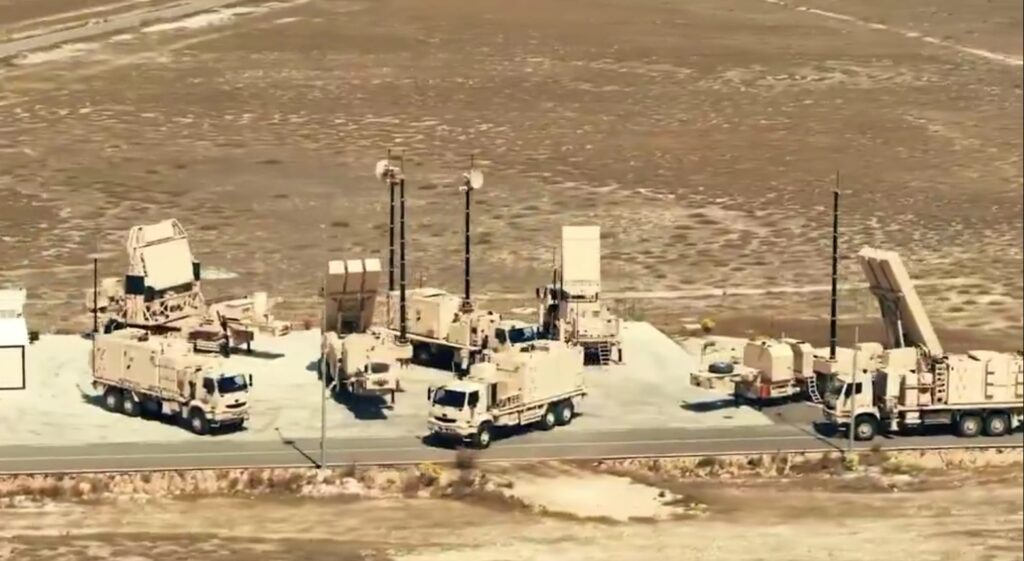
Haluk Görgün, the head of Turkey’s top defense procurement agency, on Wednesday unveiled a new artificial intelligence-supported air defense system named “Çelik Kubbe” (Steel Dome), describing it as a comprehensive, multi-layered architecture designed to detect and neutralize aerial threats at varying altitudes and from long distances, the state-run Anadolu news agency reported.
The system, developed under the coordination of the Presidency of the Defense Industry — the agency responsible for managing Turkey’s military procurement — was introduced during a speech at an event organized by SAHA Istanbul, the country’s largest defense and aerospace industry cluster. Görgün said Çelik Kubbe responds to Turkey’s growing need for enhanced airspace security in the face of regional threats and shifting geopolitical dynamics.
“With artificial intelligence-supported decision mechanisms, this system detects and neutralizes threats from the greatest possible distances,” he said.
Unlike defense systems optimized to intercept specific types of threats, such as Israel’s Iron Dome, Turkey’s Çelik Kubbe is designed to handle a broader array of dangers, including drones, cruise missiles, aircraft and other airborne targets. It integrates domestically produced air defense elements into a single operational doctrine supported by advanced sensors and centralized control software.
At the core of the system is the HAKİM command-and-control architecture and the RADNET radar network, both developed in Turkey. The system brings together long-range SİPER missiles, the HİSAR family of medium and low-altitude interceptors, KORKUT self-propelled anti-aircraft artillery and the SUNGUR man-portable air defense systems.
These components are interconnected through an AI-supported command structure that provides all units with a common operational picture. This structure enables rapid threat assessment and coordinated engagement, enhanced by electro-optical sensors, jamming systems and high-performance radars — all domestically manufactured.
Görgün emphasized that acquiring systems from different foreign suppliers often creates integration issues. Turkey’s unified, homegrown approach, he said, benefits from shared engineering standards and streamlined coordination, allowing for smoother technical integration and logistics. He noted that the Çelik Kubbe project involves collaboration with hundreds of subcontractors, including a large number of small and medium-sized enterprises, which strengthens the country’s defense production base.
Görgün also linked the system to Turkey’s longer-term military strategy, which envisions future conflicts involving sixth-generation warfare — defined by high-speed decision-making, manned-unmanned teaming and sensor fusion. He cited ongoing projects such as the KIZILELMA unmanned fighter jet, the stealth UCAV ANKA-3, the HÜRJET advanced jet trainer and the KAAN fifth-generation combat aircraft as part of this strategic evolution.
He added that more than half of Turkey’s defense exports currently go to NATO and European Union countries, framing Çelik Kubbe as a symbol of the country’s technological ambitions and its drive to become a leading defense exporter.